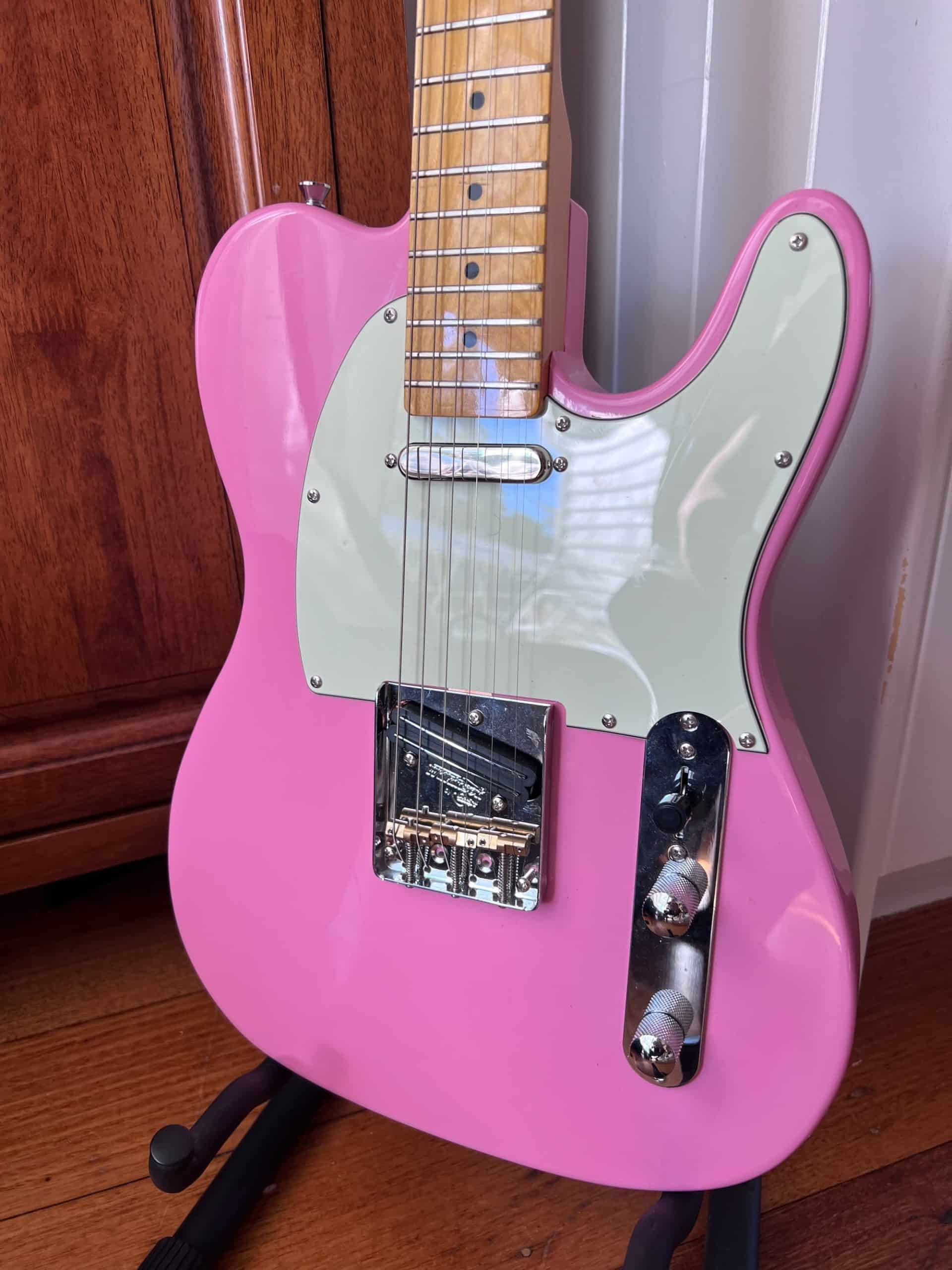
Buying and Building my Pink AliExpress Telecaster
So, I have a thing for pink guitars. But they are rare, often expensive, and I’m an impatient cheapskate.
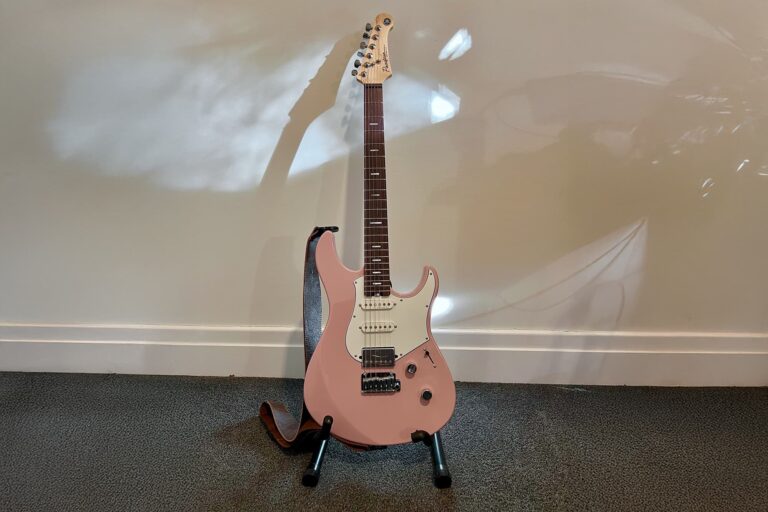
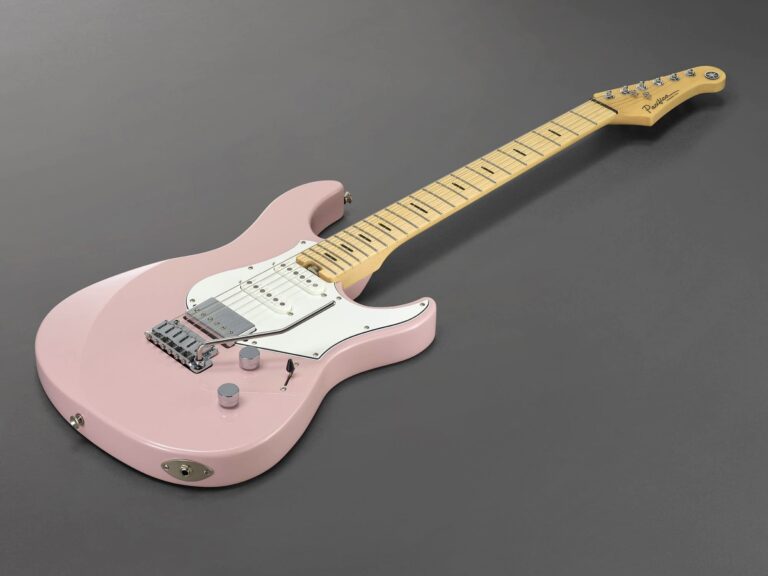
I already have one pink guitar — a Yamaha Pacifica. I’ve had a hankering for a pink Fender or Squier Telecaster, though. Brand new, a Squier is over $600 in Australian dollars, and still isn’t exactly how I’d like it — I want a maple neck, for one thing.
So, against all better judgment, I decided to buy a guitar on AliExpress.
Briefly, about me: I’m a hobbyist player. I’ve got a bunch of guitars and tend to buy and sell them, experimenting with what I like. I am pretty agnostic about things like fretboard material and even pickup quality — amp and speakers are everything, to me, and my amp and speakers tend to make anything sound good. As long as a guitar stays in tune, isn’t annoying or painful to hold, and produces a usable, clean signal from the pickups, there’s a LOT you can do downstream.
The TL;DR of this process is that it took about one or two days of fiddling to bring it up to a high standard and cost me about A$280/US$200 (including some discount coupons), excluding about A$100 of reusable tools I had to buy, and resulted in a kick-ass guitar that I’d really struggle to sell. And why would I?
Audio sample through a Fender ’65 Twin simulator on a Fender Mustang Micro Plus, a few different pickups settings and styles (c’mon don’t judge my random sample playing).
Phase 1: The Order
Here’s the guitar I bought, as shown on AliExpress:
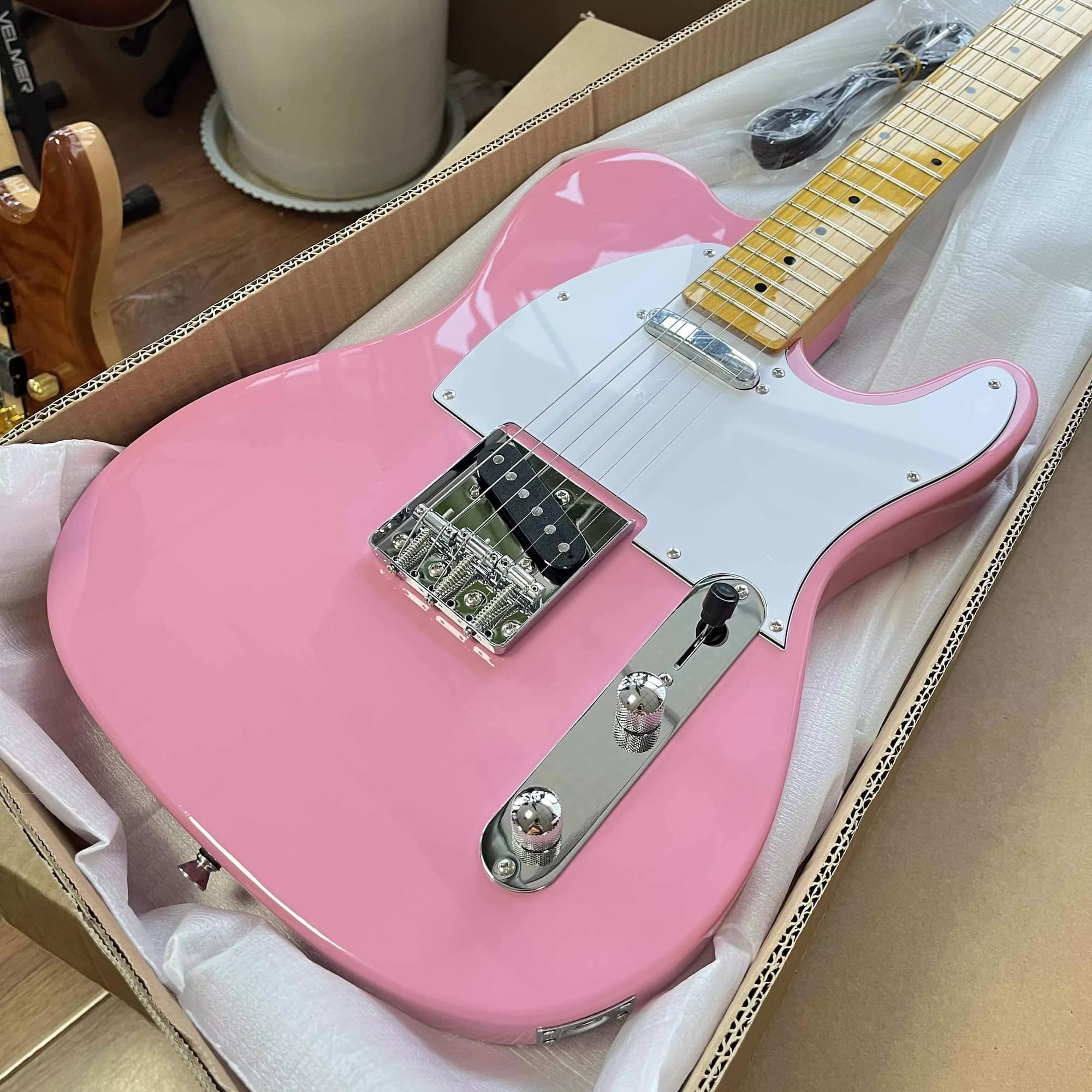
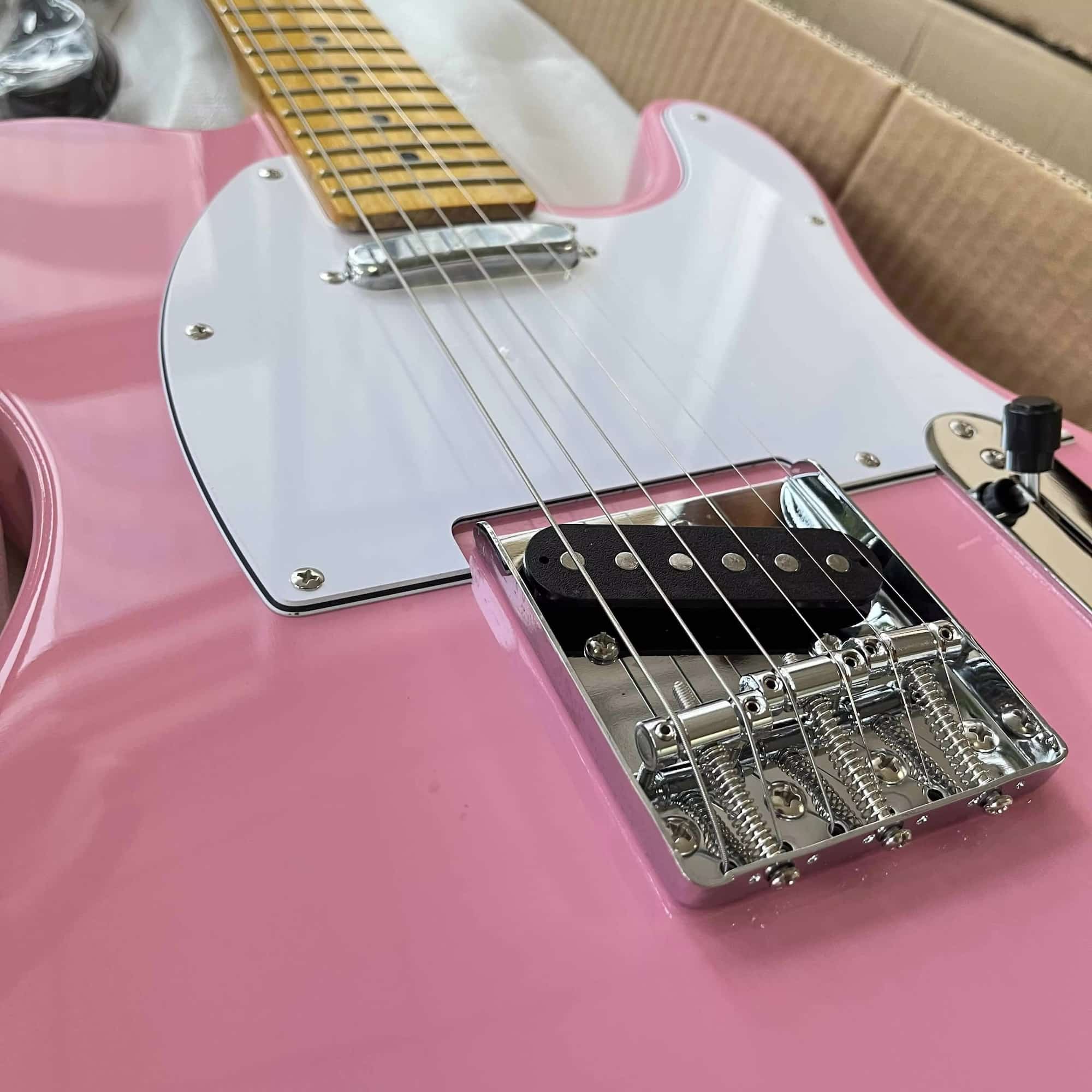
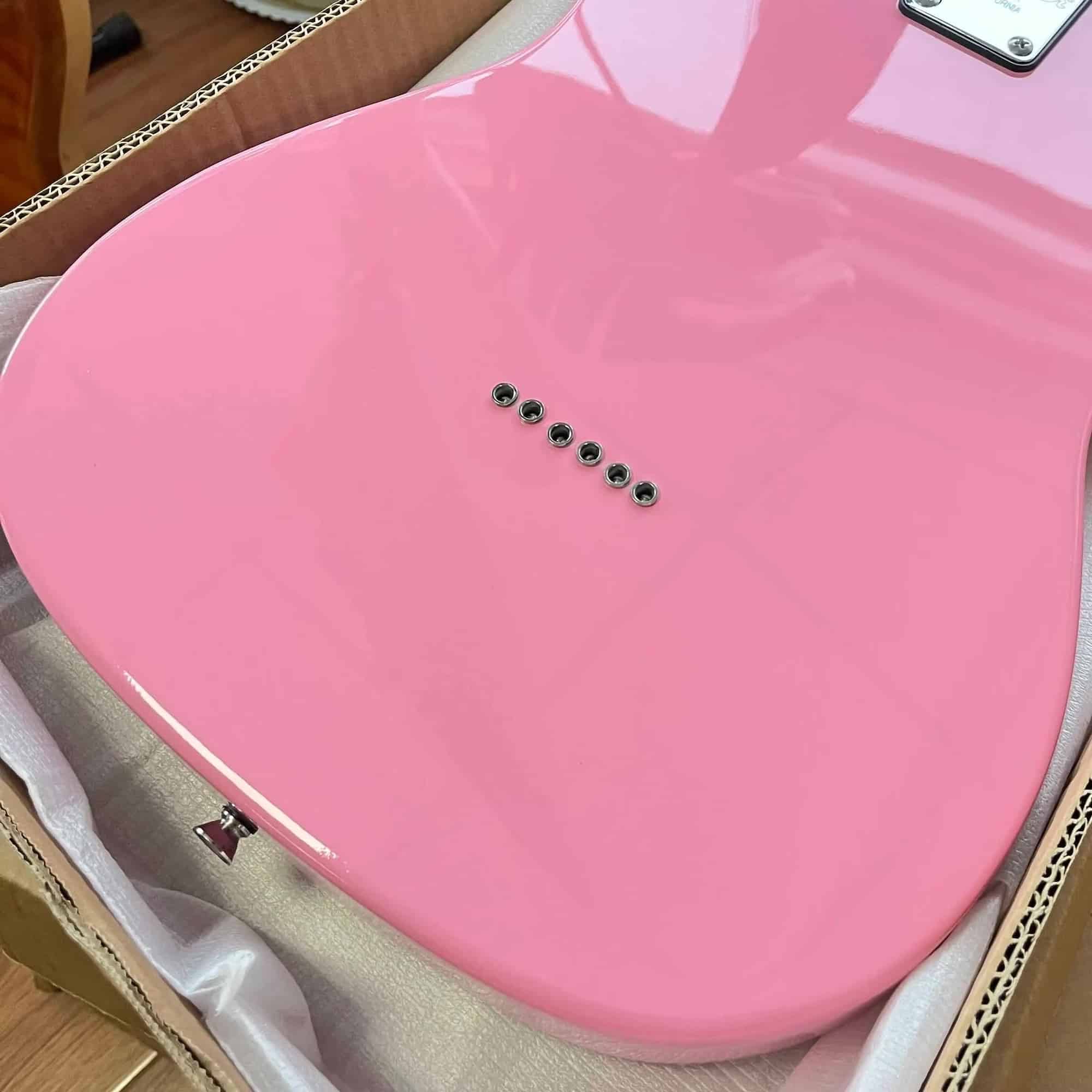
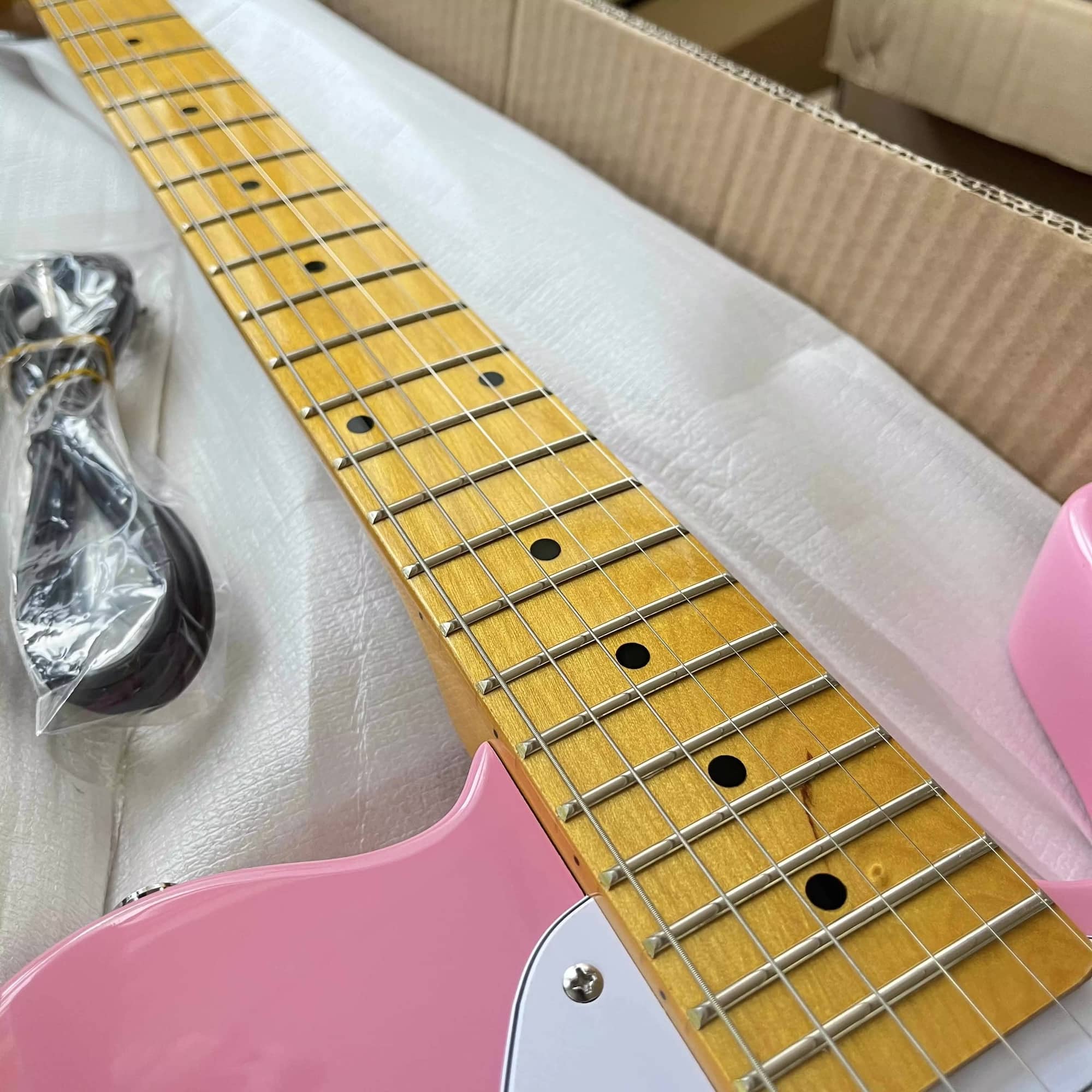
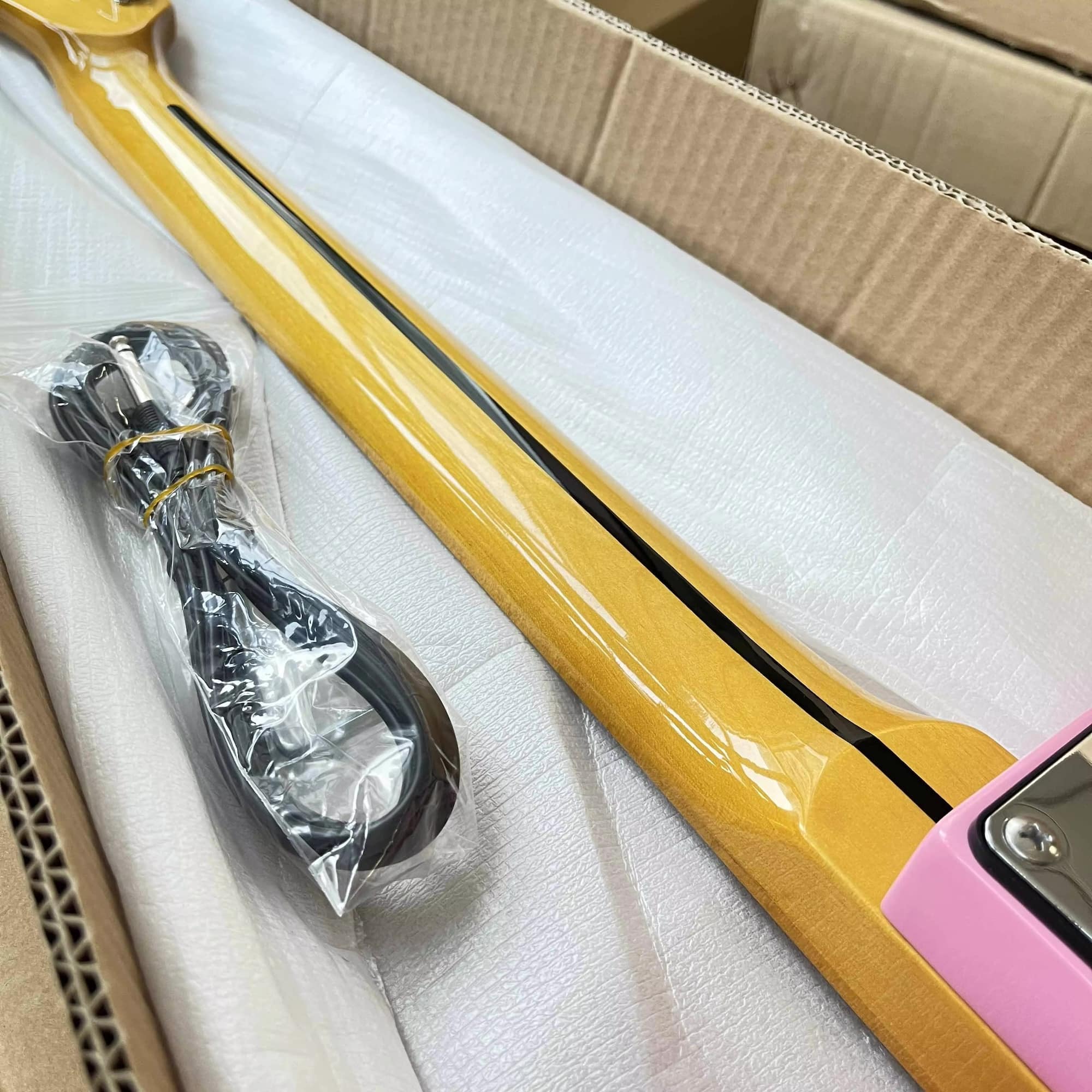
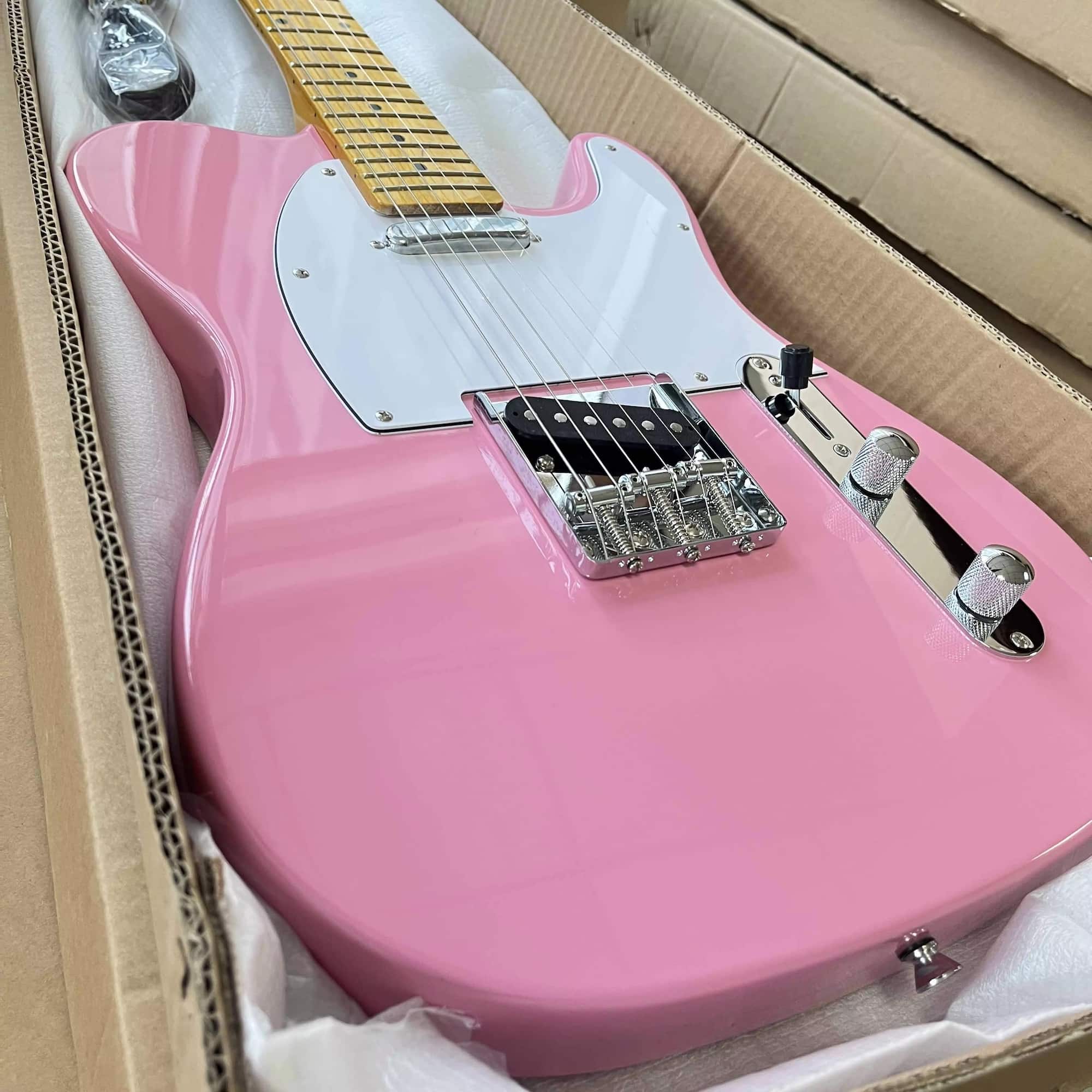
In the photos it looked fantastic! There are lots of kinds of pink, but this is one of the shades I like.
I paid A$170 for it. Actually, it was A$178.93, with a $30 coupon, but with about $20 of taxes. So, $170 in Australian dollar-y-doos, or about US$110.
Not bad. I could, worst case, use this as a modding platform. I could add on some Guyker components and Fleor pickups, and for another $50 or so actually have a pretty decent guitar!
Before buying it, I had no idea how good the pickups, bridge, controls, or tuners would be. I didn’t know the radius of the neck (probably 9.5 inches), and I didn’t know what it would weigh. I suspected the nut would not be perfectly cut. I doubted the frets would be even. Oh, and I didn’t know what logo (if any) they’d put on the headstock! I tried to request it with no logo, but that wasn’t an option.
But I was excited, anyway.
I decided to trust AliExpress because I was paying with PayPal, which gives heaps of buyer protection if things go wrong. Behind that, I have a Chase credit card, and disputes are easy.
AliExpress themselves are pretty forgiving and refund you if things go missing or are damaged. Finally, I did a few searches on the shop, Huyangshu, and found that they weren’t disreputable.
The thing is, I had to wait until it arrived before taking any further steps. There was always a chance I’d have to return it. And there was a chance I’d like it as it was for kitsch value, or maybe as a travel guitar.
Delivery and Arrival
I ordered the guitar the same day I ordered a few other cables. Those arrived within a week. The guitar… a lot longer.
Now, even though I ordered it on November 24 and the estimated date of arrival was 6 January, AliExpress stuff usually arrives earlier than promised. So, I had my hopes up… but that was unwarranted.
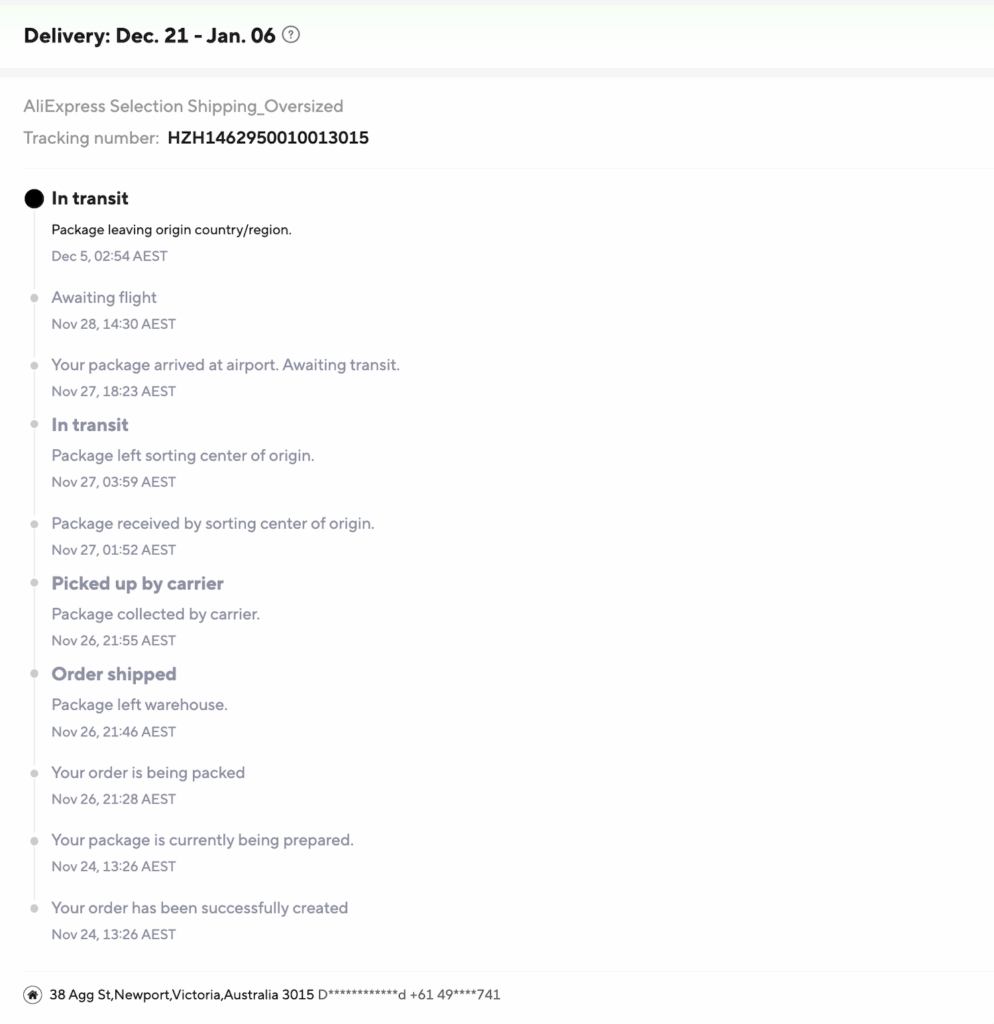
The crazy part is the huge delays in some phases. Did they really send it by plane, or was it being sent by boat? Oh well. Frankly, for <$180, it was amazing they didn’t charge extra for shipping.
The guitar finally arrived, with almost no warning, on Friday, 2 January, 2026. Just shy of the delivery date.
Arrival and Unboxing
I didn’t make a boring unboxing video, but here’s how it looked as delivered:
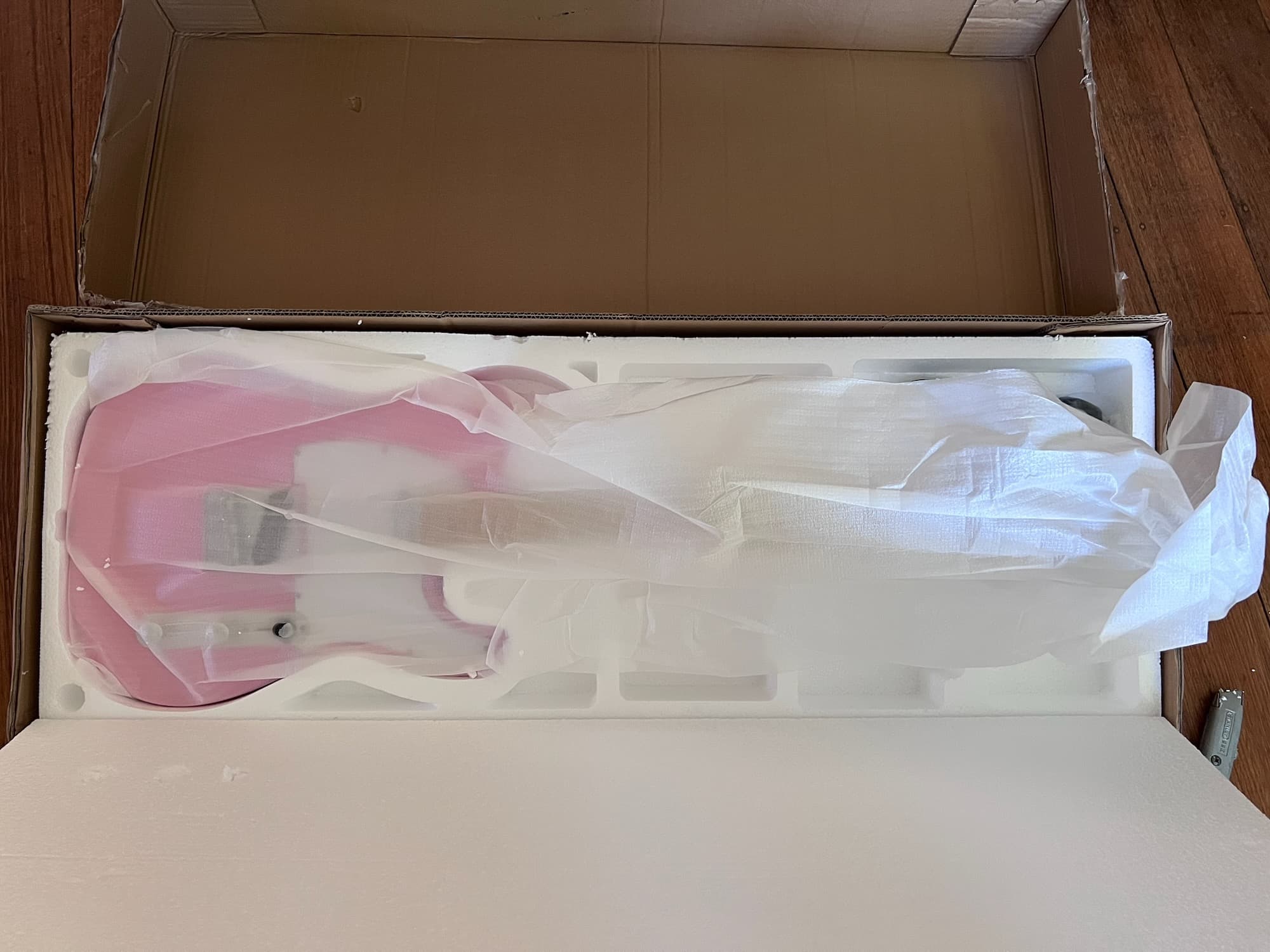
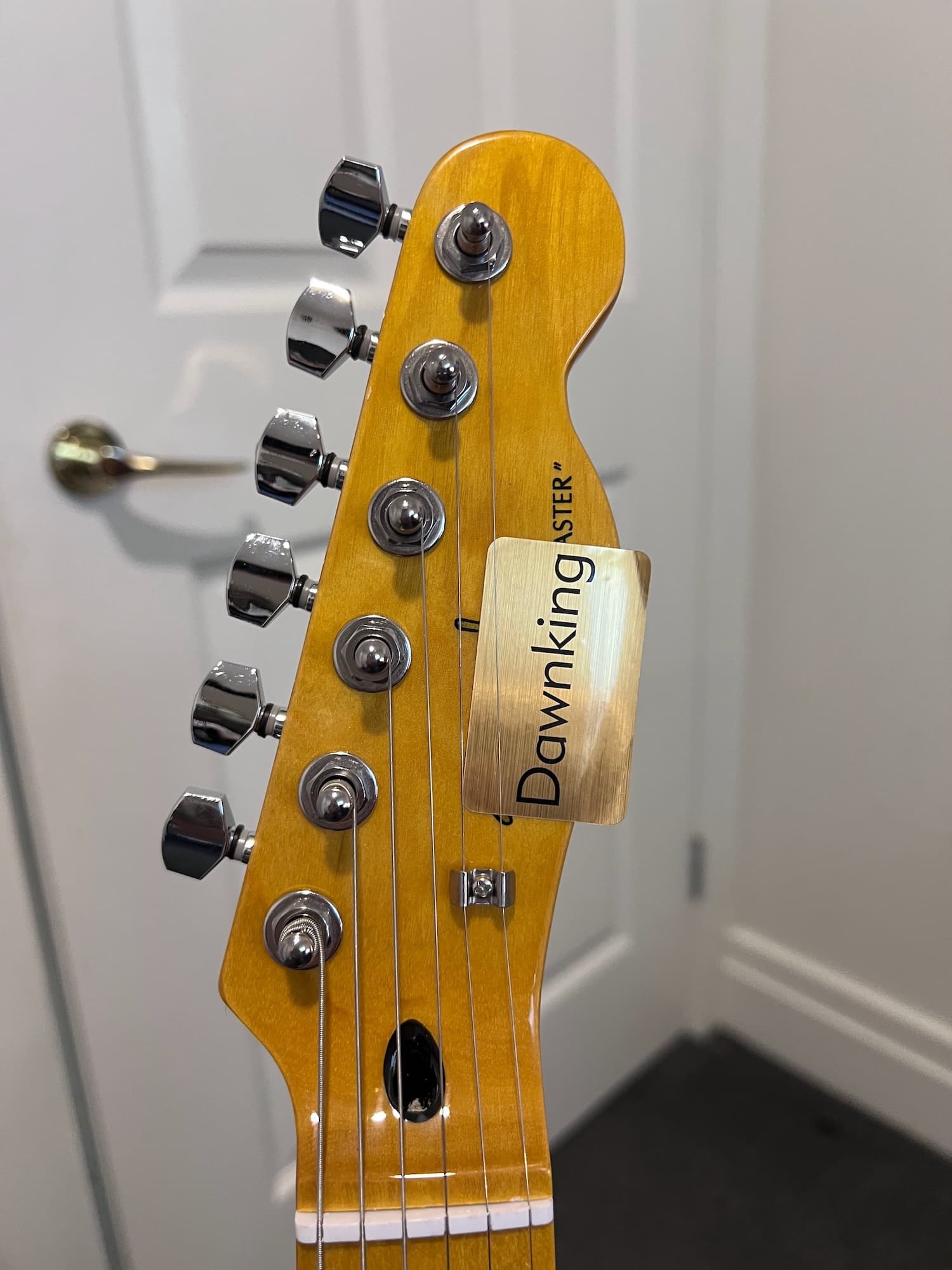
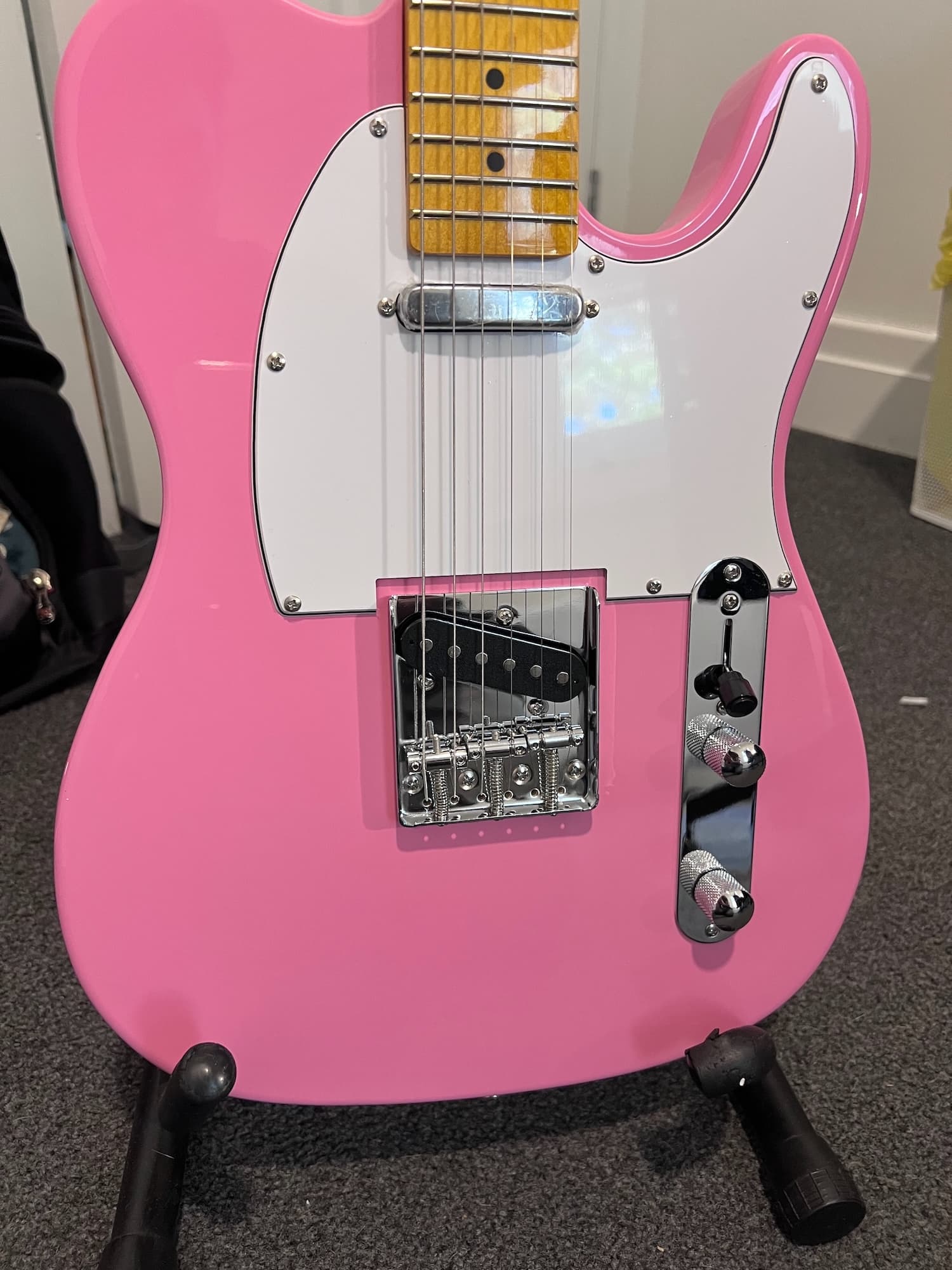
Firstly, cosmetically, the guitar was in SHOCKINGLY good condition. I have seen guitars in guitar stores locally in Australia in worse condition — faulty pickups, scratches, dents, etc.
Musically, it was fine, too — it was easy to tune and tuned up well. It was even intonated, despite the cheap-looking uncompensated saddles! The frets were surprisingly level and I could play it with no buzz.
My main qualms with this guitar were
- The pickups were WEAK. I played with the heights, and maxed out the control knobs, but still… I barely got any signal out and had to turn the gain way up (which produced lots of noise, a separate but related issue). The pickups were particularly weak on the high-E-string side. I tried adjusting pickup height, too.
- Some combination of the tuners and bridge/saddles was not keeping it in tune well.
These were things I expected. Because cosmetically it was fine and the neck was straight, I decided to order some new pickups, a new bridge, and new tuners.
There was a chance I’d need to modify the pots, but I put this off for later (or never).
Stage 1 Modifications: Pickups, Bridge, Tuners, Strings
The first phase was the easy part: electronics. I was going to install a proper bridge, good pickups, locking tuners, and some fresh strings of decent quality. Here’s what the first batch of parts cost.
| Item | Image | Price (AUD) |
|---|---|---|
| Pickups. I got a Fleor set — a neck pickup + hot dual rails humbucker bridge pickup. | 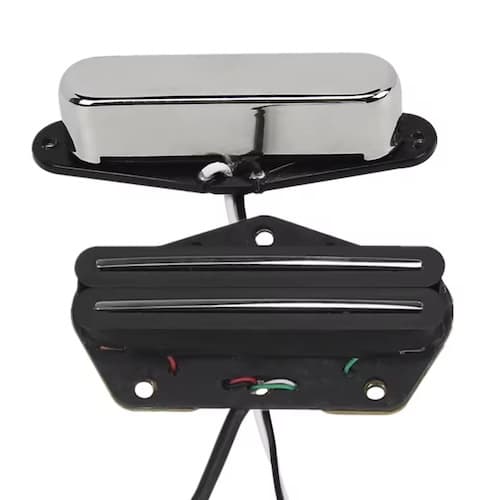 | $32.88 |
| Wilkinson bridge with brass compensated saddles. I decided to go for a conventional design that’s well-regarded rather than something fancy like individual roller saddles. | 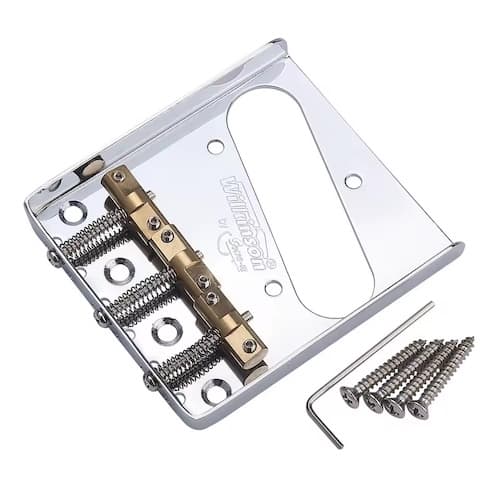 | $39.81 |
| Locking tuners, generic, bought so string removal while fixing it up would be easy and reversible. | 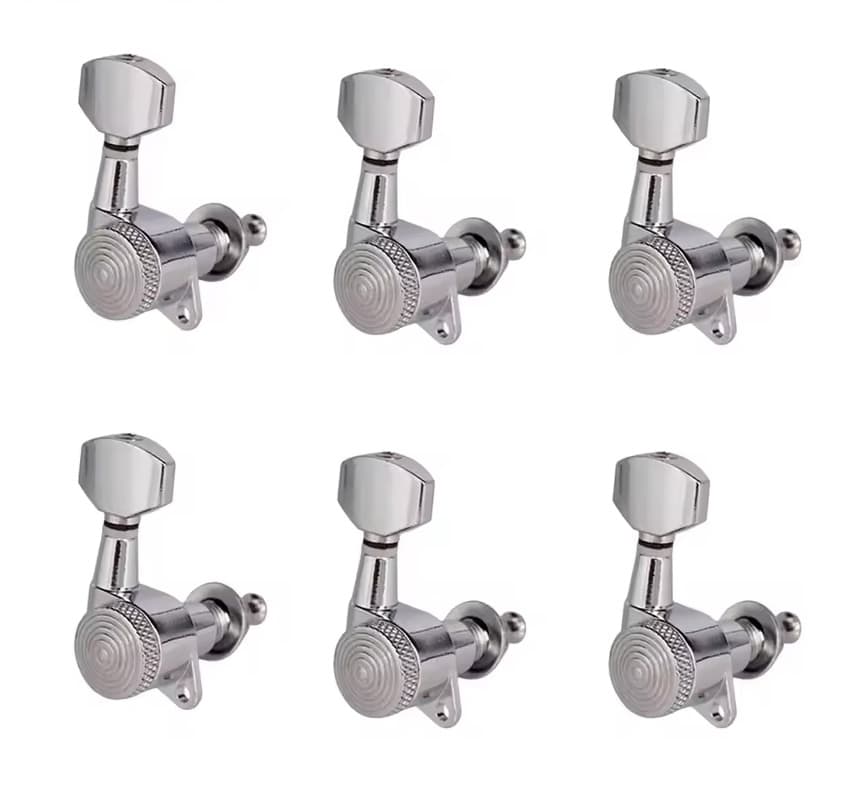 | $19.04 |
| Strings (Artist Guitars). I use these on all my guitars. | 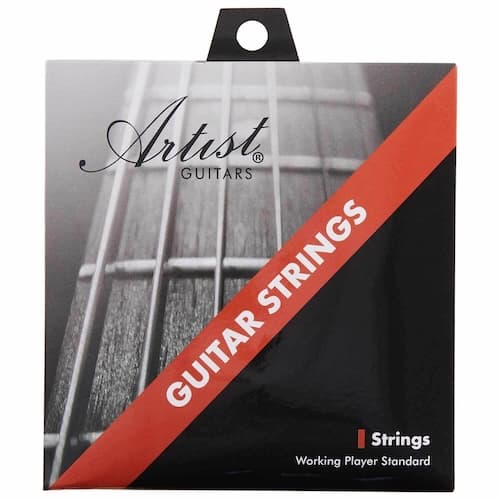 | $7 |
| Total | ~$95 |
So, $95 in modifications to a $170 guitar seems crazy (remember, this is all AUD), but the whole thing was so cheap, it didn’t really faze me. These would bring it into the realm of a competent guitar.
My goal was for this to still be like a Telecaster at the end. I even hesitated over the idea of a dual rail humbucker bridge pickup… but I knew I’d like it!
I spent one morning doing the stage one modifications. I did it once and then had to redo it, as I realised I hadn’t properly grounded the bridge. Fixing guitars, when you’re an amateur, involves undoing and redoing the strings a lot, so locking tuners become an important tool.
Success! The new pickups sounded a lot better. I adjusted the action and the guitar became quite playable — with one caveat…
This guitar was noisy. The cavities were unshielded, of course. So I realised I was going to have to do another phase of modifications.
Another thing I noticed was that the B and high E strings had a minor “sitar” effect. This came from a poorly cut nut. The nut itself was obviously plastic, which is fine… but why not upgrade it to a bone or better composite nut, and then cut that properly.
That meant there was going to have to be a second stage of modifications.
I also noticed when I put a fret rocker onto it that it did have some high and low frets. So it’d need a proper fret level.
Stage 2 Modifications: Shielding, Nut, Fret Level
To do this job, I had to buy:
- Shielding tape
- Fret levelling tools (a sanding beam, crowning files, and polishers) — all from AliExpress
- A new nut — also from AliExpress, by Guyker
- Nut files (not the real kind, the ones that are basically wires with a roughness on them)
- A pickguard (so I could tape it up… not necessary, but it looks nice)
I also had to use masking tape but I already had that.
Here’s the price list of things I bought:
| Item | Image | Price (AUD) |
|---|---|---|
| Shielding tape (had to buy way more than I needed…) | 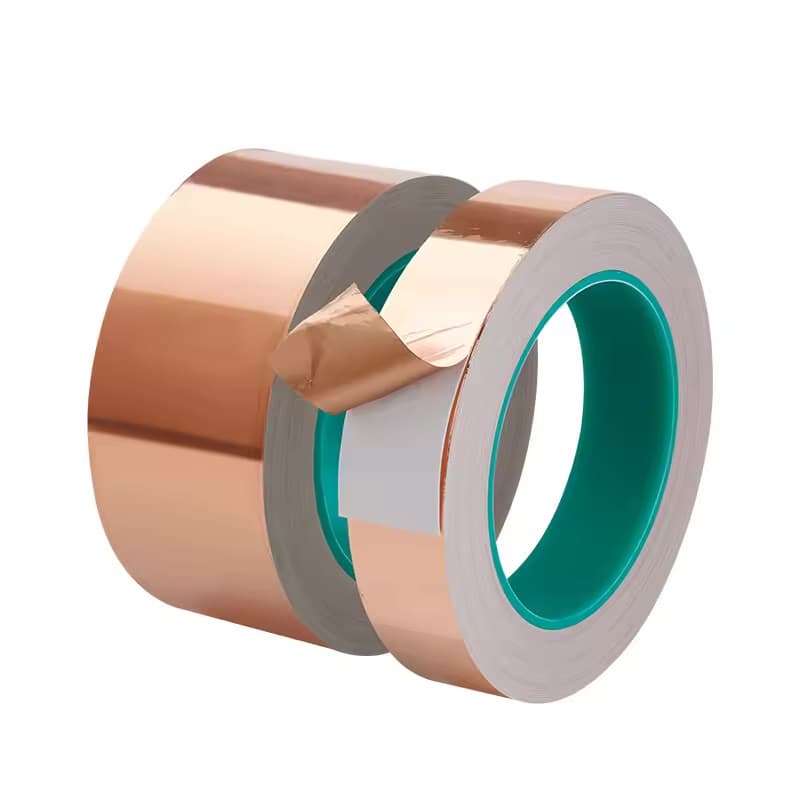 | $20 |
| Sanding beam | 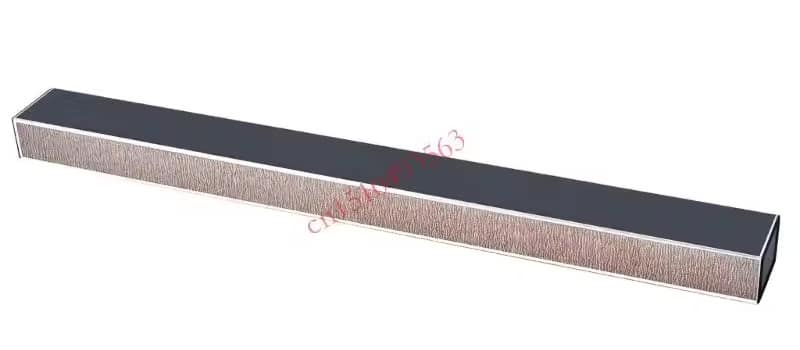 | $18.03 |
| Fret erasers | 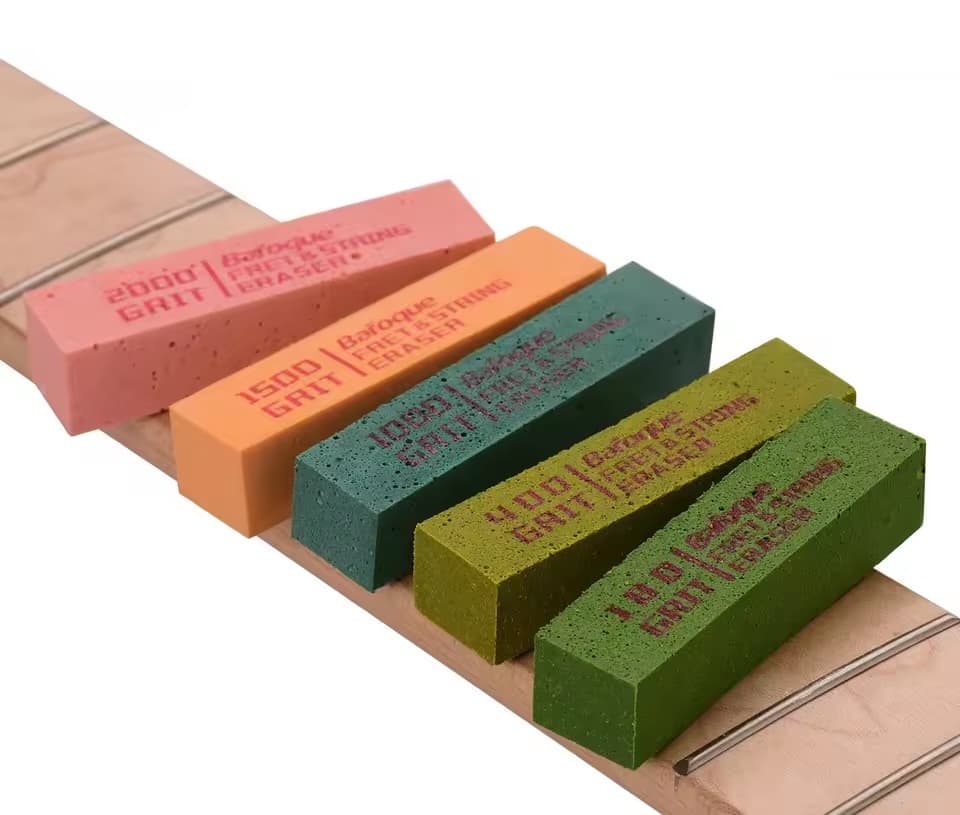 | $32.55 |
| Crowning file | 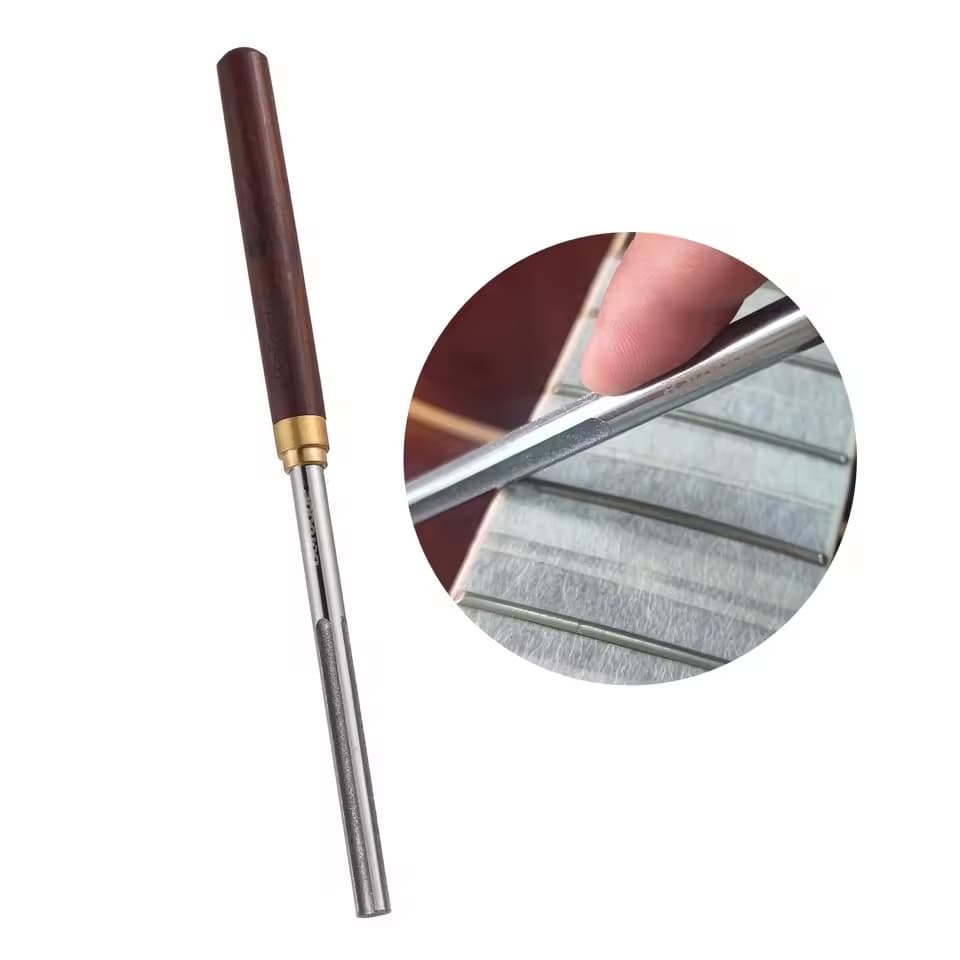 | $34.97 |
| Guyker bone nut (not including the wrong-sized one) | 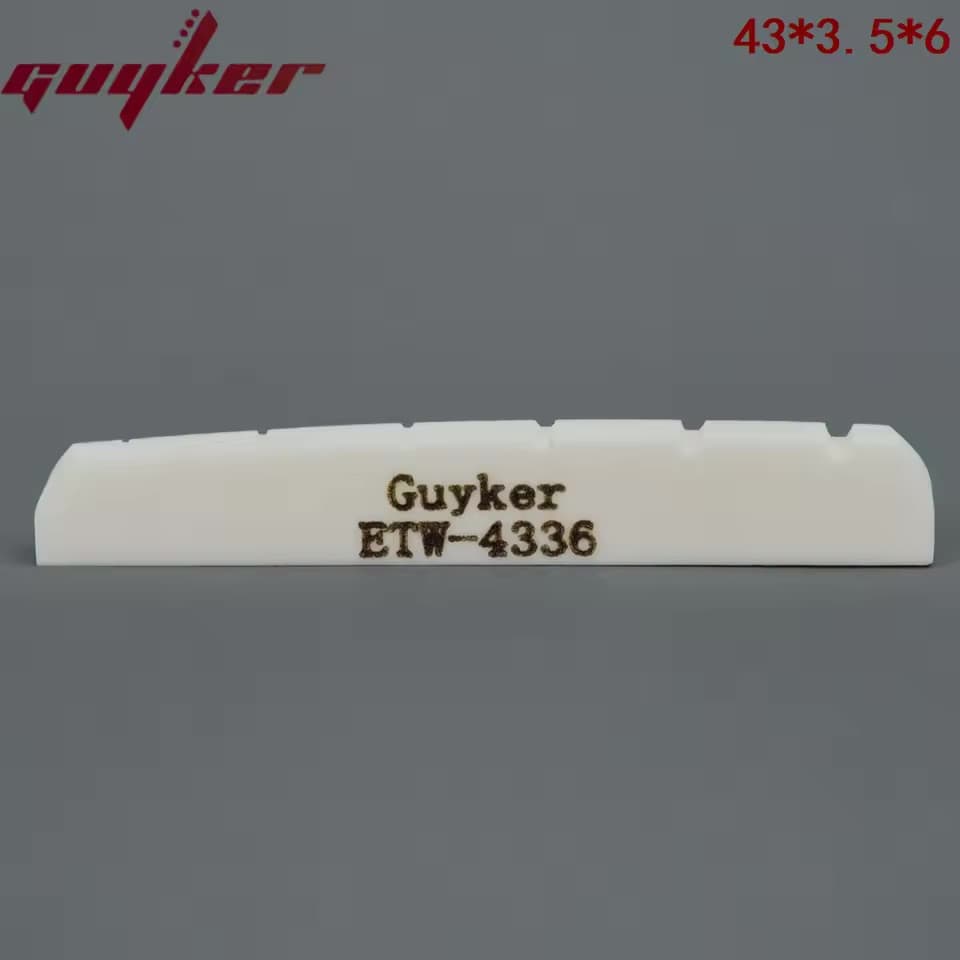 | $7.28 |
| Nut files (generic) | 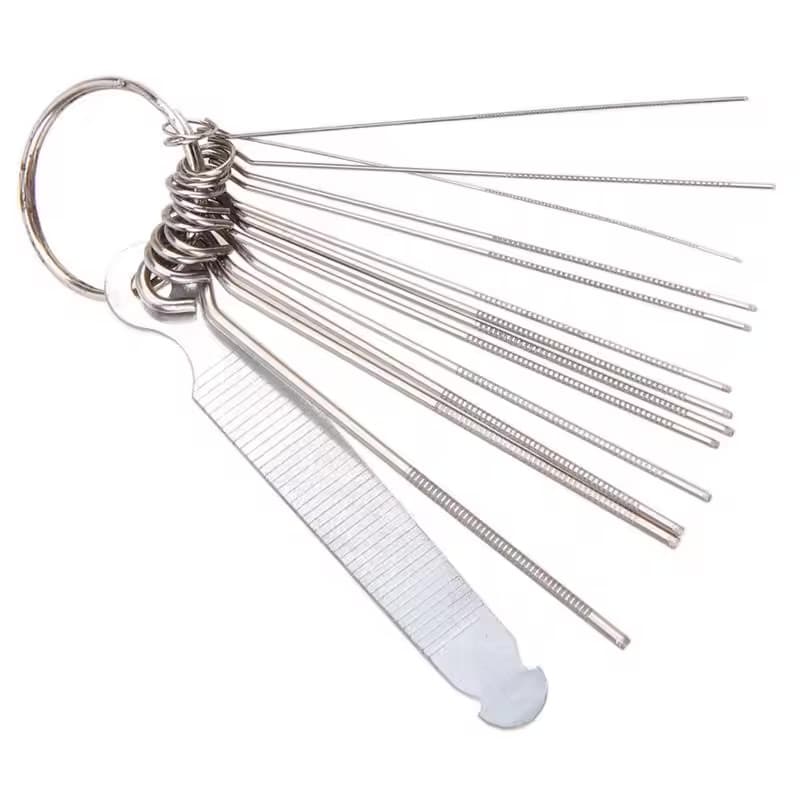 | $3.42 |
| Musiclily pickguard | 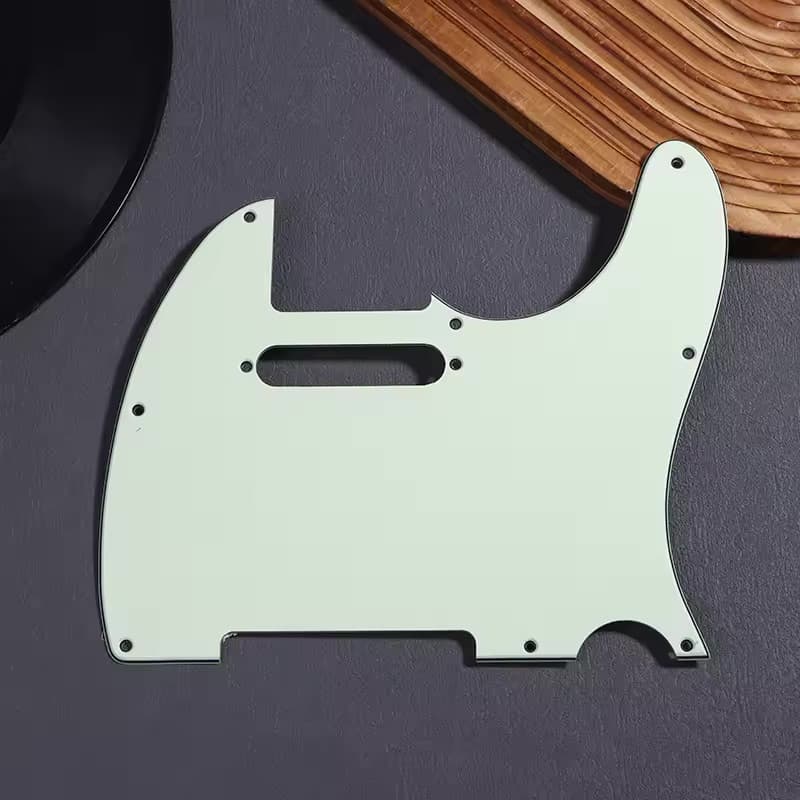 | $8.16 |
| Total (including tools) Components only | ~$120 $16 |
Prices go up and down on these small items. Again, $120 sounds crazy, but most of these are reusable tools — only the pickguard and bone nut (and a fraction of the shielding tape) went into the guitar. Maybe $16 of value.
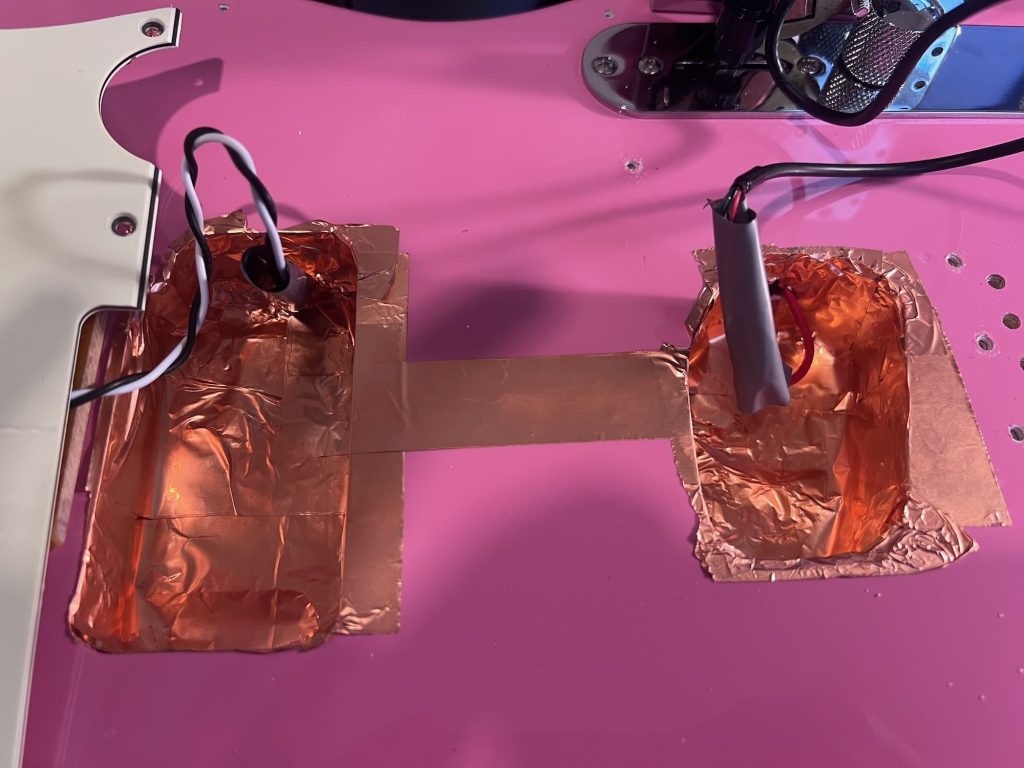
The first job was shielding. This was easy enough in principle, but it was very fiddly. I took before-and-after audio samples and the difference was STARK.
(Note, I’m an electronics nerd so I take a lot of the knowledge of shielding for granted, but remember: shield the cavity as well as the covers, connect to a real ground, ensure the tape is reflective on both sides, and test for continuity everywhere.)
Second was the fret level. I just used a cheap sanding beam and some sanding erasers. Forget expensive stuff from StewMac or MusicNomad. I know their gear is great, but I always suspect I’d get away with cheap stuff. This isn’t a $10K vintage Gibson going to a client, which would warrant good tools; it’s a fun project, for me. Many YouTube tutorials say you can check for flatness on a flat surface like a glass table. That’s how I like to think!
A lot of the job was prep — taping up the fretboard.
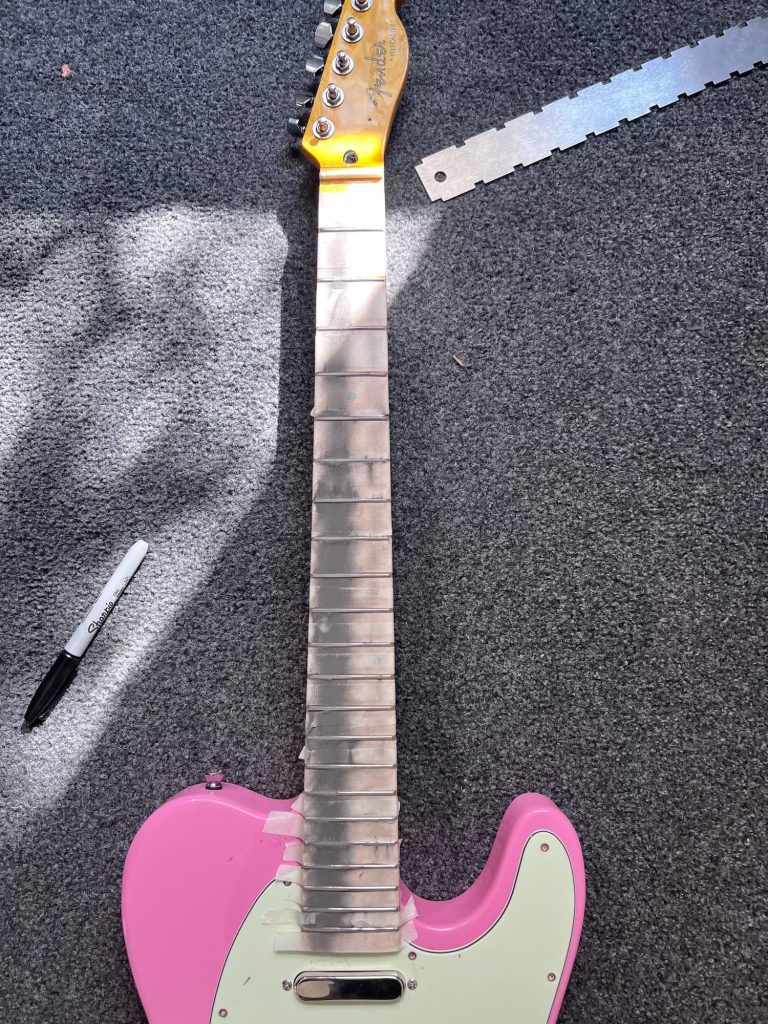
But a lot of the rest of the job was the actual levelling, crowning, and polishing, too.
I used cheap tools for this — a $30 sanding beam, $20 fret erasers, and a $30 diamond crowning file. And it all came out fine.
Levelling and crowning the frets took me ages. I had to sand off quite a bit, which lowered some of the frets. Then I had to crown them. Polishing was the easy part.
Finally, the nut. This was a surprisingly hard part of the job. I started with a cheap Guyker bone nut, about $8 if I recall correctly.
Normally, you won’t have to replace a nut. But because I had a bit of sitar effect on the B string, I thought I may as well. I’d rather not do this again, though — it’s very fiddly and easy to get wrong.
First, I bought the wrong nut size – 43 mm rather than 42 mm, despite measuring pretty carefully, so I had to spend another $8! Second, the nut was too thick, so I spent AGES filing about a millimetre of thickness away. Third, it was too tall, so I had to spend ages again filing off about 2mm of height. Filing bone is kind of gross… it smells like burned bone.
Once I got it all done, I used my nut files to tweak the string height following various guides I found, and got it all together.
Review of the finished product
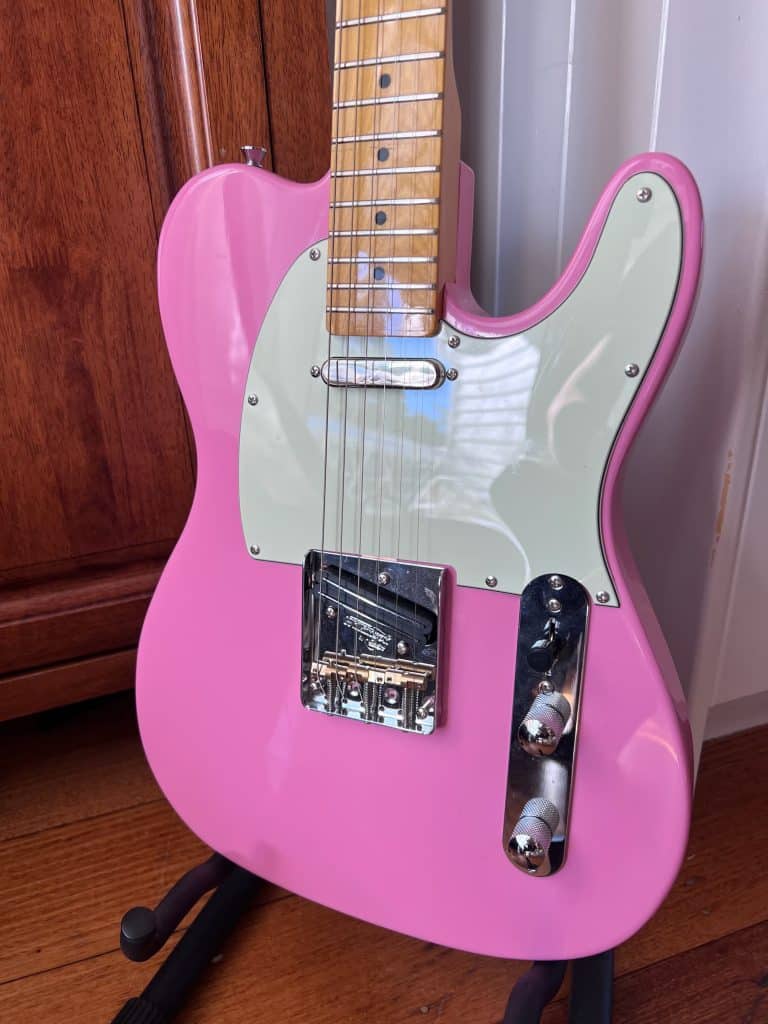
This guitar is AWESOME. I don’t think it’s just because I made it. I play it back to back with a couple of other guitars I have, and I love the sound of the rails humbucker — lots of gain, easy to drive an amp. The neck pickup is clean and sweet-sounding — nothing remarkable, but it just does its job, as well as any other Alnico pickup.
The action is incredible. This guitar now has an unfair advantage over much more expensive guitars in my arsenal. It just plays like butter. I barely have to breathe on it to get it playing.
The only part I don’t like is the fake Fender logo. I tried to remove it, but it looked difficult enough that I decided to leave it while I play the guitar for a bit.
Conclusion
A lot of people wonder if a guitar from AliExpress is worth it. In stock form, I’d say the guitar was slightly worse than something like a Squier Bullet, because the pickups were so low-output and noisy. The body, frets, and bridge were all on par with a low-end guitar.
I’ve seen talk that SOME guitars from AliExpress are good to go. Maybe mine just had bad pickups.
But I’d definitely say that most will need some work to become properly playable. Mine needed new pickups. Yours might need a new bridge or a new nut, or maybe a better neck.
And to get them to high quality, you’ll have to replace about $100 in parts and do a fret job.
That said, it’s still a great way to get a cheap project guitar that looks right and then build it into an actual player.