Lazy-ass, highly subjective comparison of a Squier Affinity and Fender Player Jazz Bass
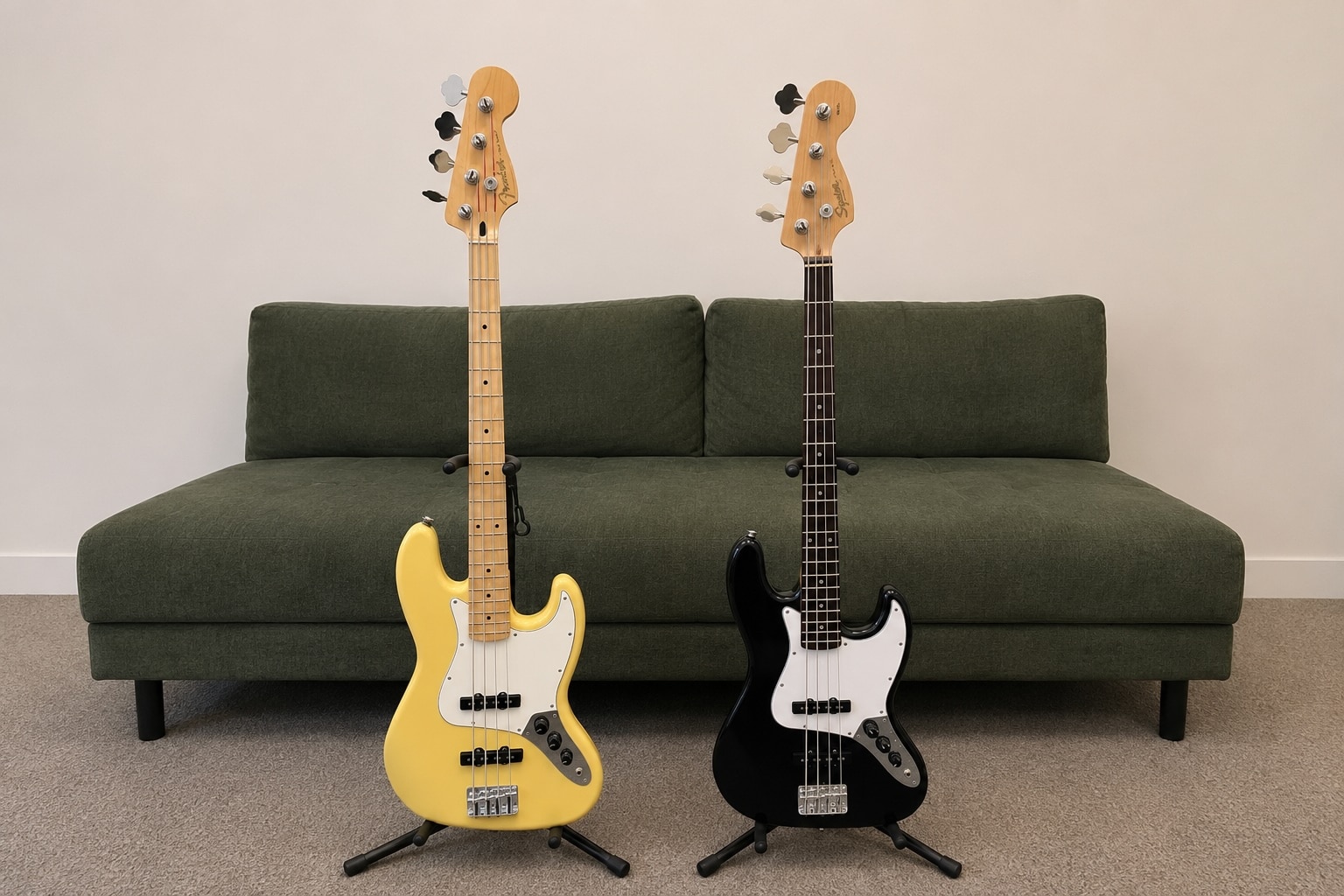
I decided to compare two bass guitars nobody needs to compare: a Squier Affinity Jazz Bass, and a Fender Player Jazz Bass. Why? Because I had both, because they look vaguely similar, and because you might be tempted by one more than the other.
The summary of this terrible comparison is that both the Squier Affinity and Fender Player Jazz Basses are great, but one is lighter, and one is yellow.
Back up. I’ve played guitar for years, but wanted to play the bass line for “Brick House” without feeling lame. So I found this Squier Affinity Jazz Bass for minus fifty dollars a few months back.
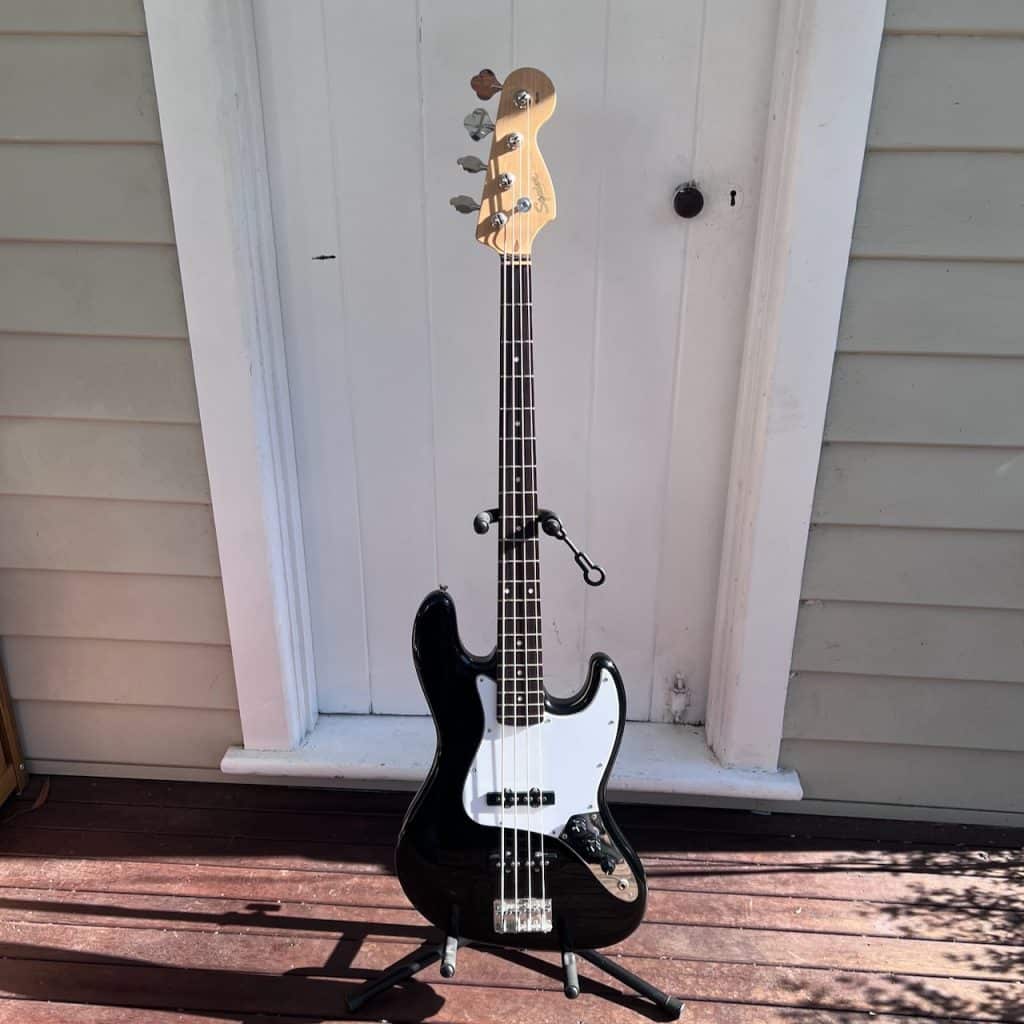
Yeah, minus fifty dollars… it came with other things (a Fender Rumble 40 and a Boss TU-3) which I sold for a profit. Cha-ching!
Side note: The Fender Rumble 40 (v3) is an awesome bass practise amp. It’s loud, it sounds fantastic, it’s light, and it’s cheap.
I like Squier Affinity models. Squiers are great! The Bullets are a bit too lightweigt and thin, but the Affinity models are regular sized, and they don’t suffer from the premium pricing of Classic Vibe models, which are priced for snobs on a budget.
And I figure a great bassist could make an Affinity sound good, and shouldn’t I try to be a great bassist? Why would I hamstring myself with too good a bass?
After bringing the Affinity home and listing the amp and tuner for sale, I set it up, replaced the strings (it was fitted with short scale strings for some reason), set it up again, and learned how to usually alternate my plucking fingers except when I forget.
In short, I played the snot out of it! I played funk, Latin (salsa), and anything else that sounded cool. To my surprise, my partner danced when I played the bass, something that never happens when I play my guitar or piano. After a few months, I felt like I could defensively play the bass. I was happy. This bass was enough.
Then this Fender Player came up on Marketplace at a crazy low price from a guy who didn’t steal it (I’m pretty sure! He knew it was set up with a low B), and I couldn’t say no.
I love yellow things, I love maple fingerboards, and I love bargains. It wasn’t as cheap as minus fifty dollars, but it was still cheap enough that I could sell it for a profit easily if I wanted.
I listed the Squier Affinity for sale, but before I sold it, I played them one after the other just to compare them. Here’s my overview of how they compare.
- Weight – The Player is heavier. On the one hand, this makes it feel heftier, but on the other, some people like a lighter guitar. This is all how you spin it, I guess. Do you like them brawny or athletic? Curvy or thin? Something for everyone.
- Feel – the necks on both feel great. Both satin finishes, smooth and easy to glide around. If I put a stocking on my hand and felt for sharp bits I might find some, but who does that? I mean, where do I even get a stocking, apart from Amazon or the supermarket or the pharmacy, and how much would they cost, hypothetically?
- Sound – almost indiscernible. They sound different, but this could just be pickup height or different strings. The Player came with strings with red on the end, which makes them look and therefore sound better. I’m sure if I spent $200 on pickups for the Squier, I’d convince myself it was worth it.
- Build quality – I noted after playing each for a while that everything stayed in the same place. What more do you want? One little detail is that the bridge seems properly grounded on the Player, whereas it wasn’t in the Affinity. What, I’m supposed to supply my own wire? Screw that, I’ll just rest my hand on the strings.
- Looks – the Player looks like fun, and the Squier looks like business.
A huge caveat to the above analysis is that I don’t perform (yet), I play with a practice amp (a Yamaha THR30), and am not very good. I’m just saying that for people like me, either bass is enough.
What’s the end result? They’re both good. One’s yellow and hefty, one’s black and lightweight. I’d be happy with either.