An Idiot’s Guide to Not Losing Money on Guitars
You won’t get rich buying and selling guitars. Put away the dream of rolling around in millions while gazing upon the most wonderful showroom of all time.
But you can have a lot of fun trying gear and meeting people, and it’s not hard to come out ahead.
Over the last couple of years, I’ve made a few thousand dollars buying and selling guitars, amps and other music gear. I’ve lost money on the occasional purchase and broken even on a few others. Most have left me with some extra cash, sometimes a few hundred dollars.
This pleases me enormously. I’ve spent plenty on motorcycles, jiu jitsu, dancing and language learning. I love those hobbies and still do them, but they’re all negative in cash flow.
There’s a good question for this: Why? The short answer is I find it fun trying out gear. I don’t get attached to objects, just people. So guitars and gear come and go, and that’s fine… other than when I find something I really like and that I don’t think I’ll find again soon!
The short version: buy used gear you understand and actually want and that has a reasonable used market, leave room for costs, make it pleasant to play, and sell it at a price someone will actually pay. Don’t count your time or you’ll definitely be losing. Treat it as a way to try different guitars, and meet some cool people along the way.
All prices below are in Australian dollars. They’re my recorded purchases and sales, not price targets for your local market. But I’ve also bought a couple of things in the US — the same principles work there, too.
First, what have I actually made?
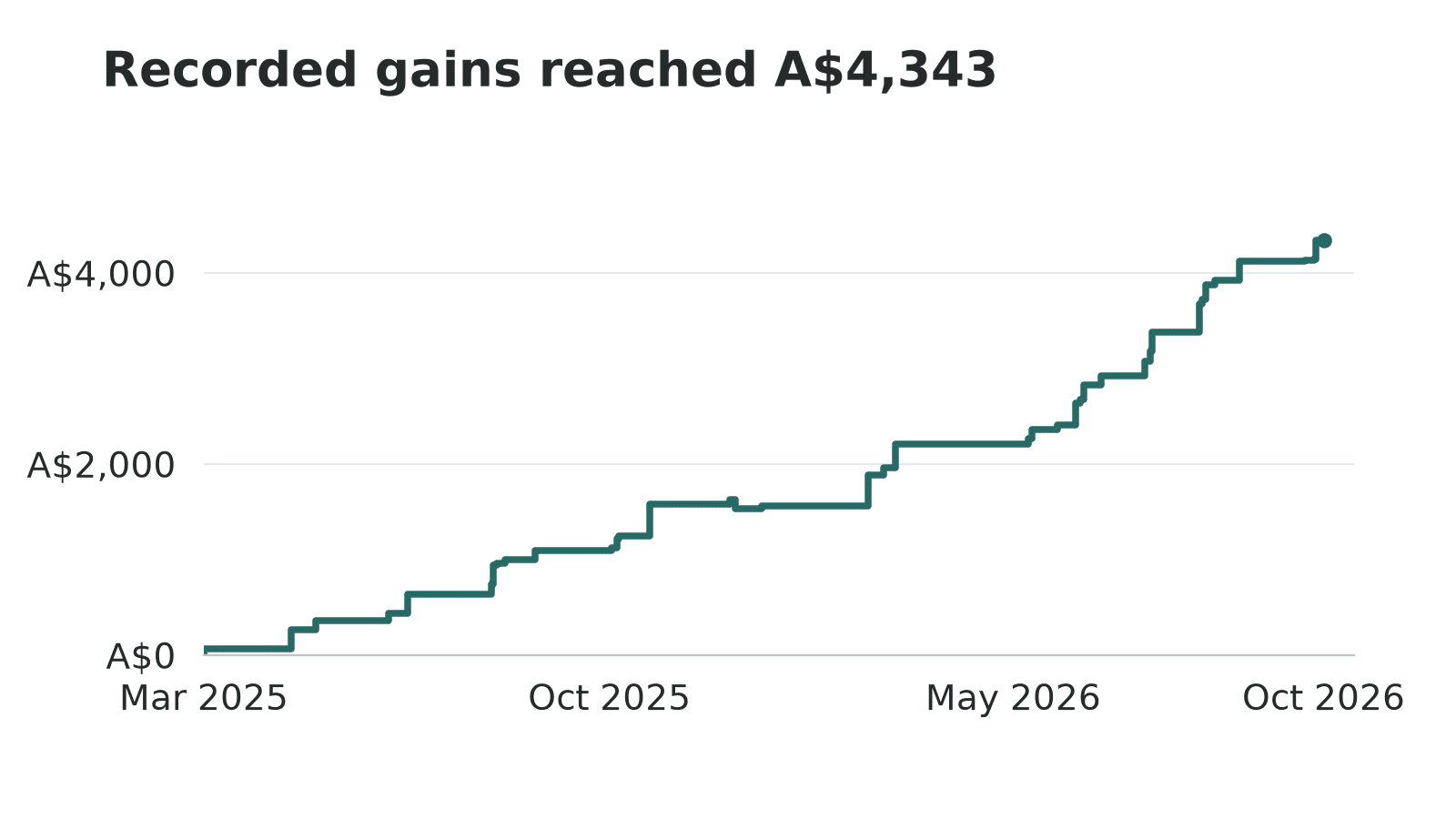
As of October 2026, my spreadsheet records A$4,342.50 in gains on sold equipment. That’s the difference between the purchase amounts and sale amounts I’ve entered. It isn’t an audited business profit (so stop reading this, tax office!): it doesn’t consistently deduct every expense (like car charging costs or wear and tear), and it puts no value on my time, arguably the biggest gap.
Across the 46 sold entries, the average recorded gain was A$94.40. Some entries cover a guitar-and-amp bundle, and some are for trades (for items I later sold).
Here are some examples. The last column is simple subtraction, before any costs that aren’t already reflected in the recorded amounts.
| Gear | Paid | Recorded sale amount | Difference |
|---|---|---|---|
| Squier Affinity Strat SSS | A$50 | A$250 | +A$200 |
| Yamaha Pacifica 112J + Roland practice amp, sold separately | A$200 total | A$325 total | +A$125 |
| Epiphone Les Paul Special II | A$100* | A$200 | +A$100 |
| Fender American Pro II HSS Strat + Mustang LT25 amp, sold separately | A$1,999 total | A$2,075 total | +A$76 |
| Chapman ML3 Pro Traditional | A$942 | A$850† | −A$92 |
| Vox Pathfinder 15R | A$240 | A$250 | +A$10 |
*I bought the Epiphone in a package and allocated A$100 of the package price to it. †The Chapman went in a trade involving a Yamaha and cash; A$850 is the disposal value recorded in my sheet — it was a rare loss.
There are some pleasing wins in there. There are also transactions for which “I got to play it for a while without spending much” is the more appropriate celebration.
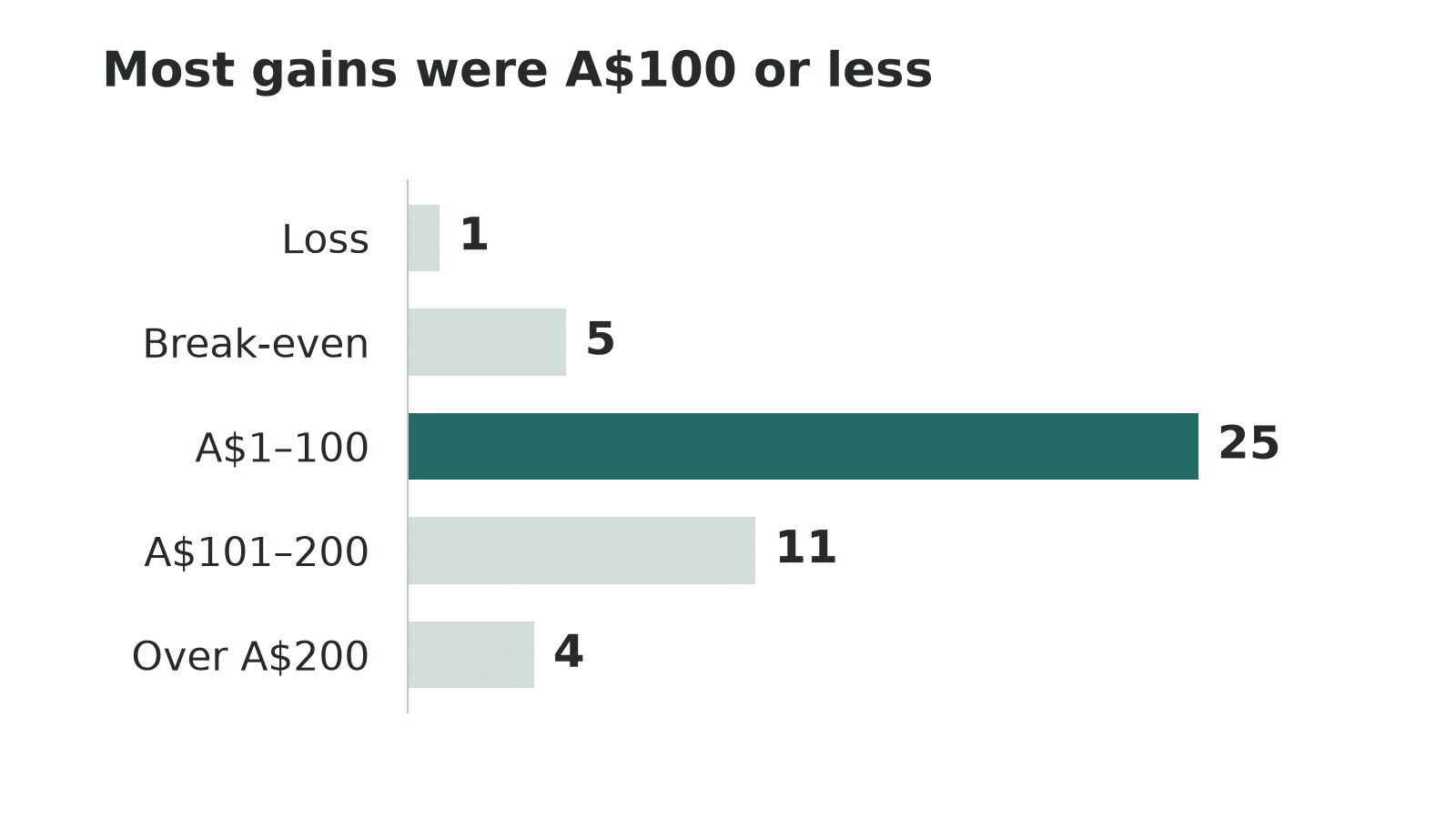
The smaller gains were much more common than the big ones. Of the 46 sold entries, 25 gained between A$1 and A$100, five broke even, and one made a loss.
OK, with that out of the way, here are the principles.
I’m omitting basic buying and selling hygiene, but it’s important. You have to know how to negotiate on either side of the transaction. I have my own style and I’m not claiming it’s the best other than that it works for me. Still, I’ve seen people on the other side of transactions that have left opportunities on the table by making simple mistakes (like negotiating against themselves, displaying too much interest, spamming lowballs, or just being unresponsive or just rude) — don’t make those mistakes.
Buy stuff you actually want (or at least are interested in).
There’s always the chance you’re going to be stuck with a bad purchase for a while, or at least have difficulty selling it. So make sure you actually want it!
This extends to being curious about something. For example, I was always curious if I could get by with a Squier Affinity, it it were well set up, so I’ve owned a couple. They are indeed very good.
The side benefit of actually being interested in something is you’re likely to know about it. I know a lot about Fender and Squier strats (not the fanciest ones) and Yamahas, a little about Epiphones, but I get lost in Ibanez models. So I buy what I know.
Buy stuff other people want, too
Focus on liquidity. A “liquid” instrument is something you can sell fairly easily at a realistic price. There are enough buyers who recognise it, understand roughly what it costs, and want it.
This means Fenders, Squiers, Epiphones, Yamahas, and not much else. And it doesn’t mean that every Fender or Squier sells instantly, or every obscure brand sits forever. It means I want evidence of demand before I buy. A model with lots of enthusiastic forum posts and very few local buyers can be a lovely guitar and an annoying thing to sell.
Some things to avoid are
- Partscasters. Worth almost nothing.
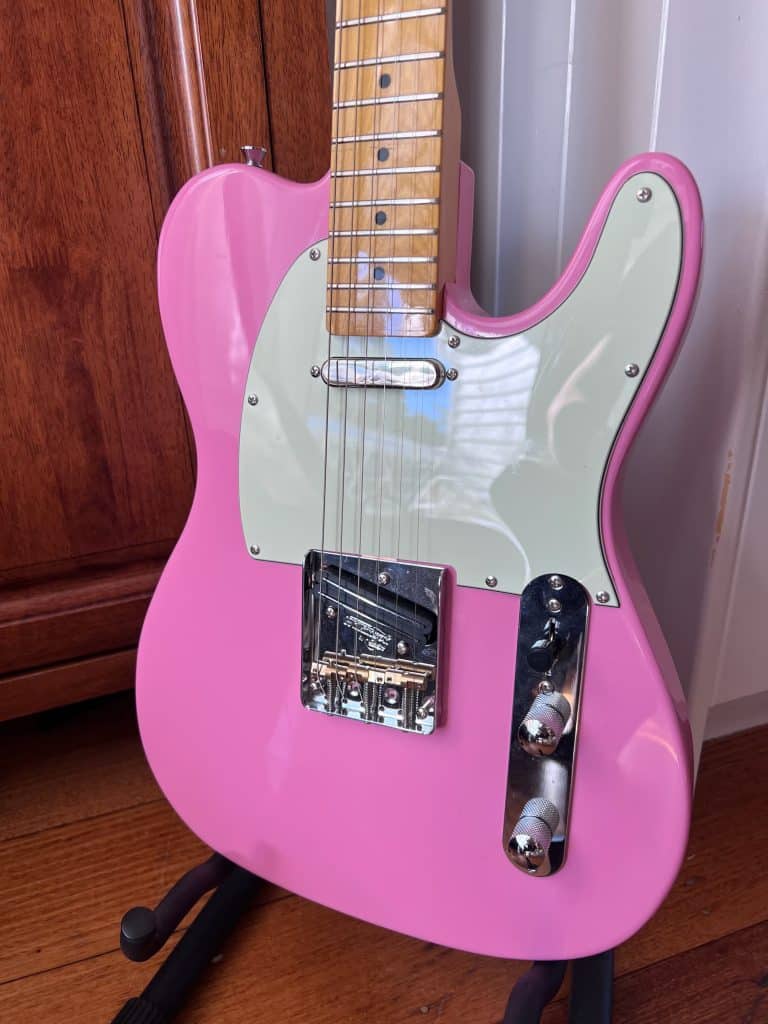
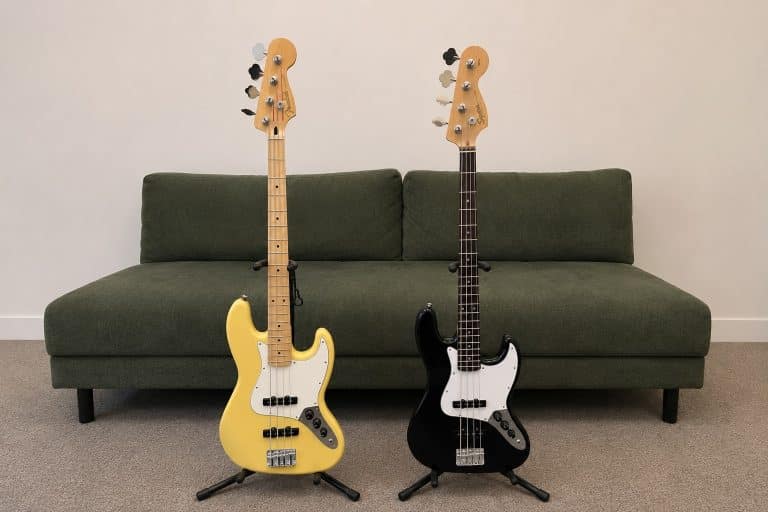
- Less usual aesthetics. It’s boring but the colours that sell are things like sunburst, white, red, and black — and shell pink, for Fenders/Squiers. Blue, yellow, and green are harder to sell. Relic is a much more niche market
- Modified guitars. Modifications usually add no value, and sometimes remove it. Some modifications are OK, like e.g. branded improved tuners or pickups, especially when the originals are included
- Any cosmetic defects. One SINGLE chip can make it very hard to sell — even though we all know they affect nothing
- “Mid-tier” guitars. It’s easier to sell something beginner or something very fancy than something merely competent or good value.
- Obscure brands — unless they’re something whose market you’re very familiar with
If the same overpriced guitar keeps appearing in my searches for months, it means it’ll be hard to sell.
(Nearly) Always buy used
If you want a decent chance of getting your money back, start with a used instrument at a sensible used price. Someone else can pay for the pleasure of peeling the plastic off the pickguard. And occasionally, you might, too!
I make exceptions for heavily discounted new gear, clearance stock and the occasional promotion. But the discount has to make sense against what people pay second-hand.
Buying from a shop doesn’t automatically ruin the deal, either. I bought a Fender American Pro II HSS Stratocaster and Mustang LT25 amp from Found Sound for A$1,999, then sold them separately on Facebook Marketplace for A$2,075. That’s only A$76 ahead before any other costs, but I got to spend time with an expensive Strat.
I also bought a Yamaha Revstar RSS20 from Parramatta Music for A$499 (delivered) and later sold it for A$750. Frankly, maybe that one was a mistake on their part. But they still sent it to me.
Sometimes a good deal means driving. I’ve travelled (at most) an hour each way for a guitar. I have an electric car and charge it from solar, so the immediate charging cost barely registers, but the time certainly does. The car still costs money to own and run, too.
Focus on “beginner” instruments
The pool of people shopping for an affordable first guitar is much bigger than the pool shopping for an expensive Gibson.
Squiers, entry-level Pacificas and cheaper Epiphones are good places to learn. I don’t mean every example is a bargain. I mean the prices are small enough that I can learn without putting several thousand dollars into a single purchase.
My best little example is a Squier Affinity Strat SSS. I bought it for A$50 on 13 April 2025 and sold it for A$250 four days later. I even kept the strap and some bits. A$200 ahead on a guitar that cost A$50 is a very satisfying — but rare — result. More common would be $100 purchased and sold for $200.
On the flip side, I’ve had quite a few mid-tier Mexican-made instruments that were very hard to sell, even at half the retail. For me, the worst spot is stuff like Vintera. They’re expensive, but still “Made in Mexico” (i.e. not Japan or the US), so people (rightly) wonder why they’d buy one over something like a Player.
The trade-off in selling beginner instruments is all the schlepping. Ten cheap guitars mean ten sets of messages and pickups. You have to enjoy enough of that process for it to be worth doing, or figure out how to scale it through automation.
Learn to service gear
I’ve serviced every guitar I’ve had: cleaned them thoroughly, checked the action and intonation, cleaned the fretboard, and cleaned or polished the frets when they needed it. Sometimes I change the strings. I think people overdo that last part, but rusty or damaged strings have to go.
I find this meditative. It’s also practice for looking after my more expensive guitars, and it means I can hand over an instrument that’s ready to play.
An Epiphone Les Paul Special II is a good example. It came in a package with an acoustic guitar and a small amp. I allocated A$100 of the purchase price to the Les Paul and sold it for A$200 two days later.
It needed work. I cleaned and polished it, adjusted the action and pickup height, replaced pickup screws and tightened the tone pot. The tuners weren’t great, but they worked, and the guitar sounded good. A beginner got a playable guitar; I got A$100 of headroom for the parts and effort.
That’s the sort of job I like. It was also satisfying getting a cheap guitar to work well!
The worst job — one that’s still ongoing — is a Cort bass whose whole body needs refinishing. Still a work in progress, sadly…
Buy where fewer people are looking
Sometimes the opportunity comes from finding the same item in a place with fewer interested buyers. I’ve looked on Gumtree, bought online, and bought used gear from shops before selling through a busier local marketplace.
I’m also happy to have a guitar shipped when the seller, packing and total price make sense. Plenty of local buyers prefer something they can hold and plug in before paying. Bringing a guitar into that local market can make it easier to sell.
But postage has to go into the purchase price. So do any selling fees and the cost of getting it to the next owner. A gap of A$100 between two listings can disappear quickly.
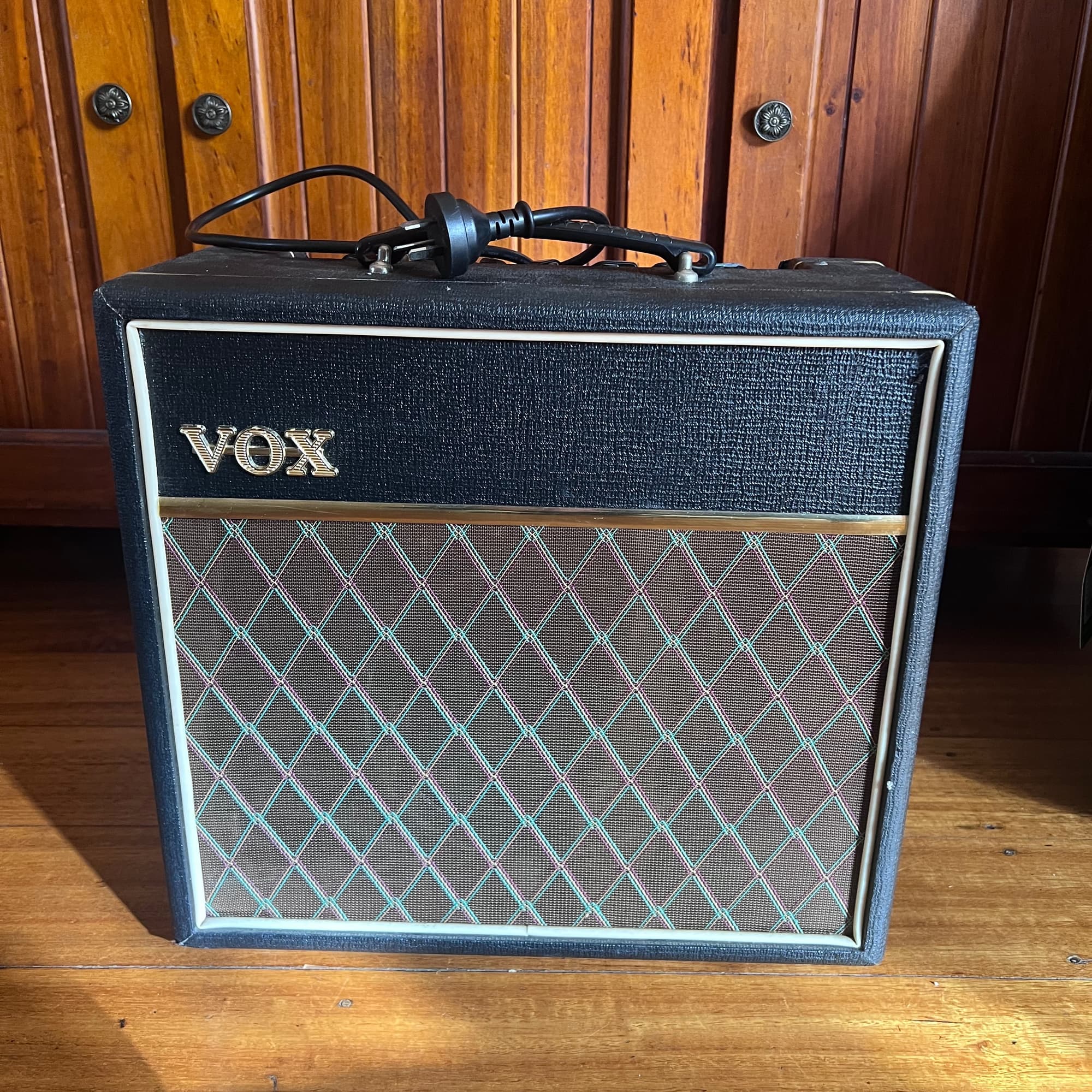
My Vox Pathfinder 15R is a modest example. I bought it delivered through eBay for A$240 on 18 March 2026, enjoyed it for a while, and sold it for A$250 on 1 October. That’s A$10 after 197 days of ownership. Sounds like not much (it isn’t), but I just wanted to see what the big deal was. I loved the sound of that amp, but it needed stronger reverb and lacked an effects loop.
Buy guitars, sometimes pedals, and occasionally amps
Guitars have generally been the easiest things for me to sell. There are people buying their first instrument and people looking for something different. A guitar is also reasonably easy to photograph, store and take to a buyer.
Pedals can be fiddly. There are so many versions and competing products to learn about, and the cash gain can be tiny. I bought a Korg Pitchblack tuner for A$50 and recorded a sale at A$55. My Boss GA-FC foot controller went for exactly the A$100 I bought it for.
Amps have often been slower for me, and bigger amps take up a lot of room. A small practice amp is easier to fit into someone else’s home and budget than a loud valve combo.
There are exceptions in my own sheet. I bought a Fender Rumble 40 for A$100 and sold it for A$250. I missed it enough to buy another later for A$250.
Cabinets are the hardest. Few people want them, they’re big and heavy, and nobody wants to pay much for them. I bought one for a great price and I love it, but having to downsize means I now have to sell it, and I’m struggling.
Buy bundle deals
A seller clearing out a hobby often wants everything gone in a single pickup. A buyer starting that hobby may only want the guitar.
I bought a Yamaha Pacifica 112J and Roland practice amp for A$200 total. The guitar sold for A$225 and the amp for A$100, bringing in a profit of $125.
So always check that the extras are worth selling separately. Sometimes, they’re not listed or priced well. I once bought a listing that was just a “Squier bass and Fender amp” – but was priced around half what it should have been. The bass was an Affinity and the amp was a Fender Rumble 40 V3, which is very well-liked as a practice amp.
The same applies to cases, stands and promotional extras. A case can be worth a lot!
Do your due diligence
I once bought a Fender American Elite-bodied Strat without properly recognising that it had an American Standard neck. I had to readvertise it honestly, and luckily, I came out ahead. But buying a different guitar from the one you thought you were buying isn’t a method I’d recommend.
Due diligence means
- Checking models against model archives — look up the serial number in the Fender database, and do an image search for the model in Google to make sure it has been sold before.
- Looking at listed prices in places where they actually sell. If you’re looking at prices on marketplace or in thrift stores, know the models probably sell for 10-20% less than listed price.
- Checking condition. Not just aesthetics and working electronics, but playability — fret dimples can kill a deal.
If I can’t value a problem and have reasonable confidence I can fix it, then I just walk away.
Make it easy to buy from you
The easiest sells for me are guitars I buy that had terrible photos and descriptions. I take better photos and give a clearer description, and it moves quickly.
Take clear photos in good light. Show the whole guitar, the headstock, the bridge and any damage. Photograph the actual item. A dark shot of half a guitar on a bed makes the buyer do more work.
Put the exact model in the title. In the description, say what’s included, what you’ve checked, what you’ve adjusted, and what still needs attention. If a knob crackles or a fret buzzes, say so.
Let a buyer test an electric guitar through an amp where practical. Tell them the pickup area and agree on a time. Answer questions directly. Plenty of people are buying their first guitar and don’t yet know what they need to ask.
Then price it to sell. I don’t need to get the highest possible amount if that means another month of messages. Getting a fair price from someone who arrives when they say they will has value.
Accept a loss and keep a lid on the collection
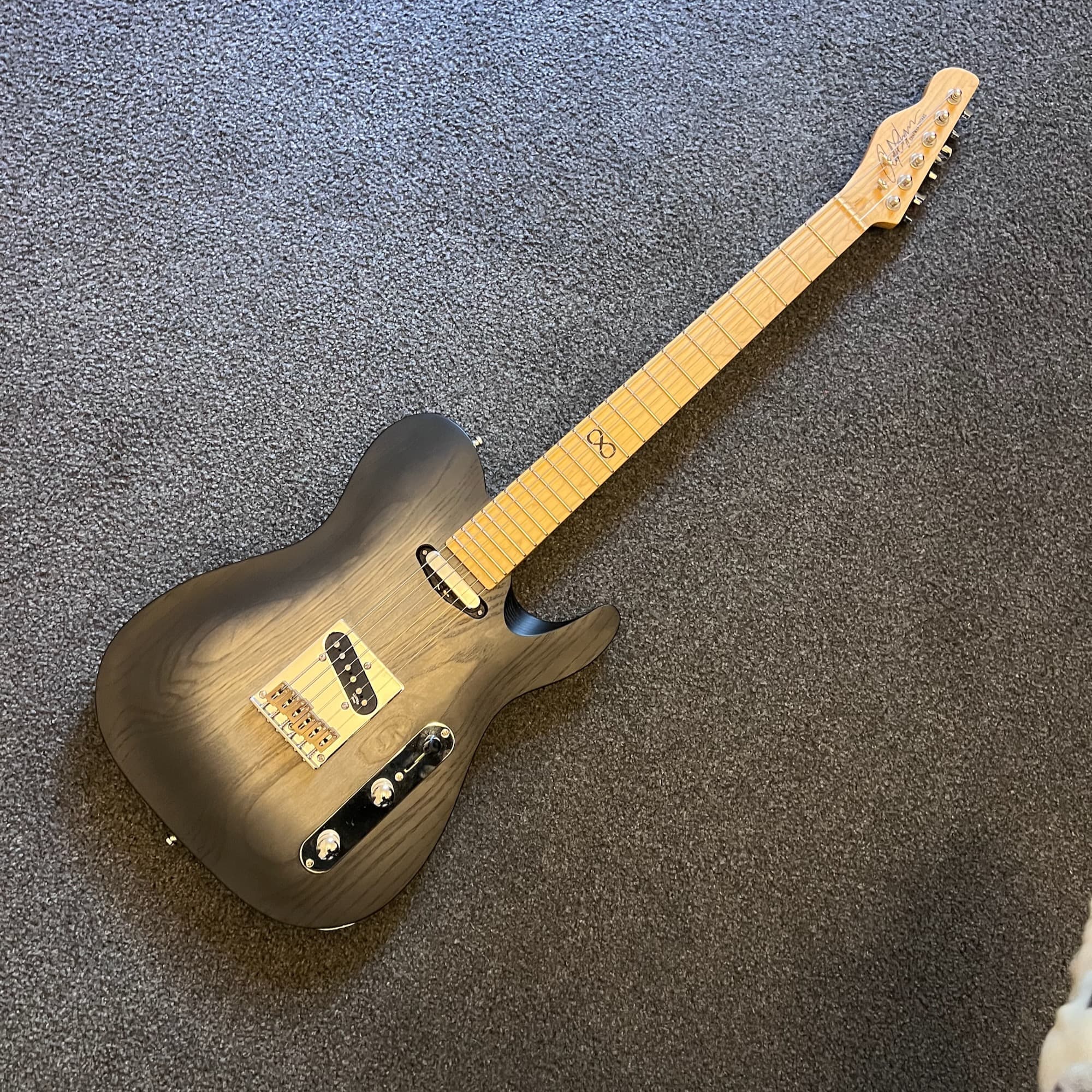
My Chapman ML3 Pro Traditional cost A$942. I bought it because I was in a bad mood (a terrible mistake I won’t make again!) and I listed it almost immediately and eventually traded it for a Yamaha plus cash, recording A$850 for the Chapman. A$92 loss.
It was a good guitar. I still shouldn’t have bought it for this purpose. Keeping it longer wouldn’t have changed the purchase price, and I wanted to move on.
This is why I want limits on how much cash and room the hobby consumes. Unsold gear still needs a buyer. Filling the house with “bargains” doesn’t make me richer.
Some things also just aren’t worth selling. If I love playing a guitar or with an amp, the money I might make from it has to compete with the cost and hassle of replacing it later.
Why bother?
Reading all that back, yes, it’s a lot of work. I could put the time into paid work and probably earn more, even at a fairly modest hourly rate. I haven’t kept a proper time log, so I can’t honestly give you my guitar-flipping hourly wage.
I do it because I like trying guitars, meeting guitar people, and learning what I want to play. Setting them up is satisfying, too. I’ve written more broadly about making money from hobbies, but I’m happy for this one to stay small.
I kept hearing the Yamaha Revstars were great, so I’ve owned a few. They are indeed great! Just not for me. I know people are obsessed with Telecasters, so I’ve had a few of those, too — also not for me. And I never expected to like Strats (or “S-type guitars”), because they’re so basic but… what do you know, I do.
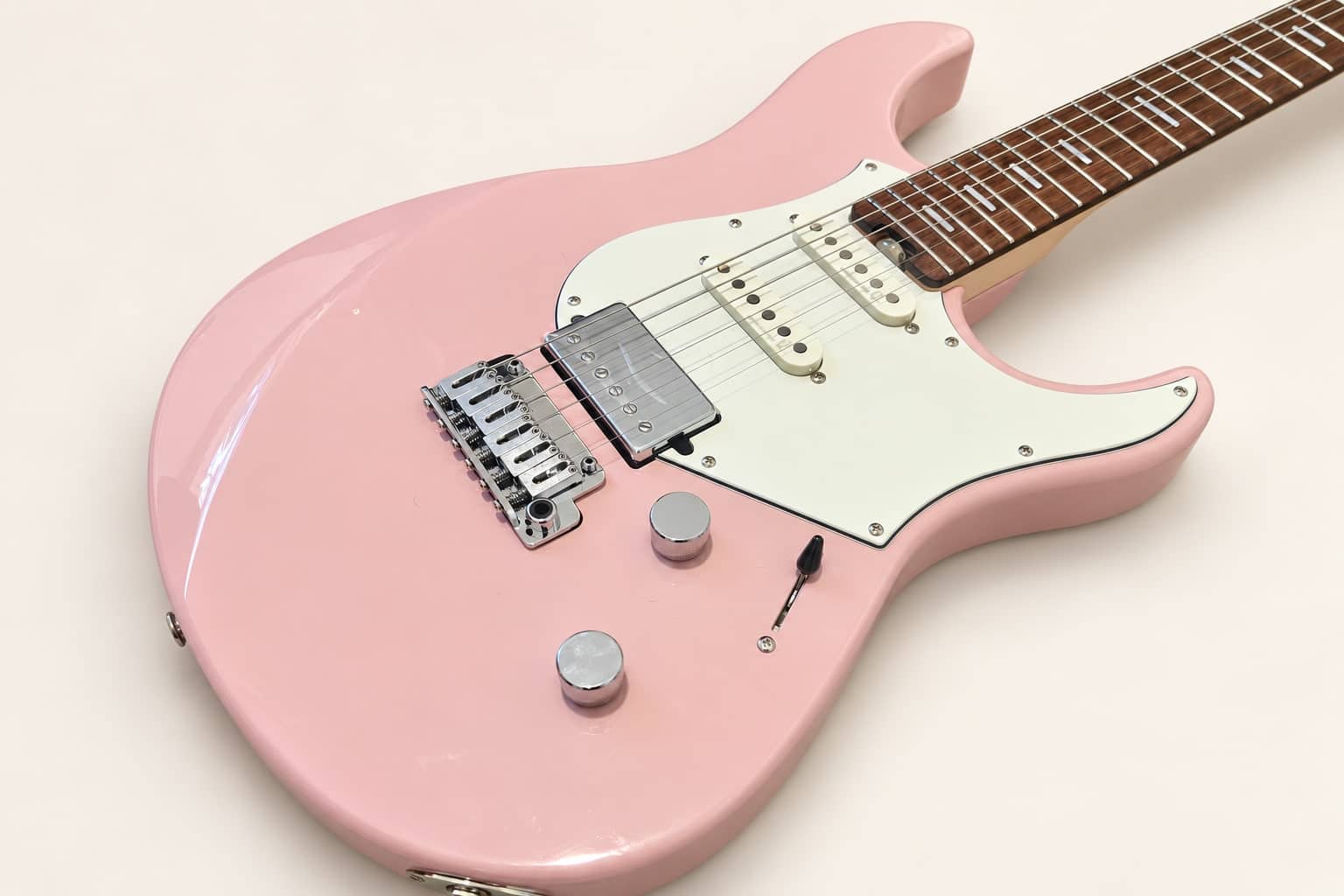
Along that journey of discovery, I’ve found guitars I’m keeping. My pink Yamaha Pacifica Standard Plus is staying. I love that thing. I can’t get a bad sound out of it, and it looks and feels great.
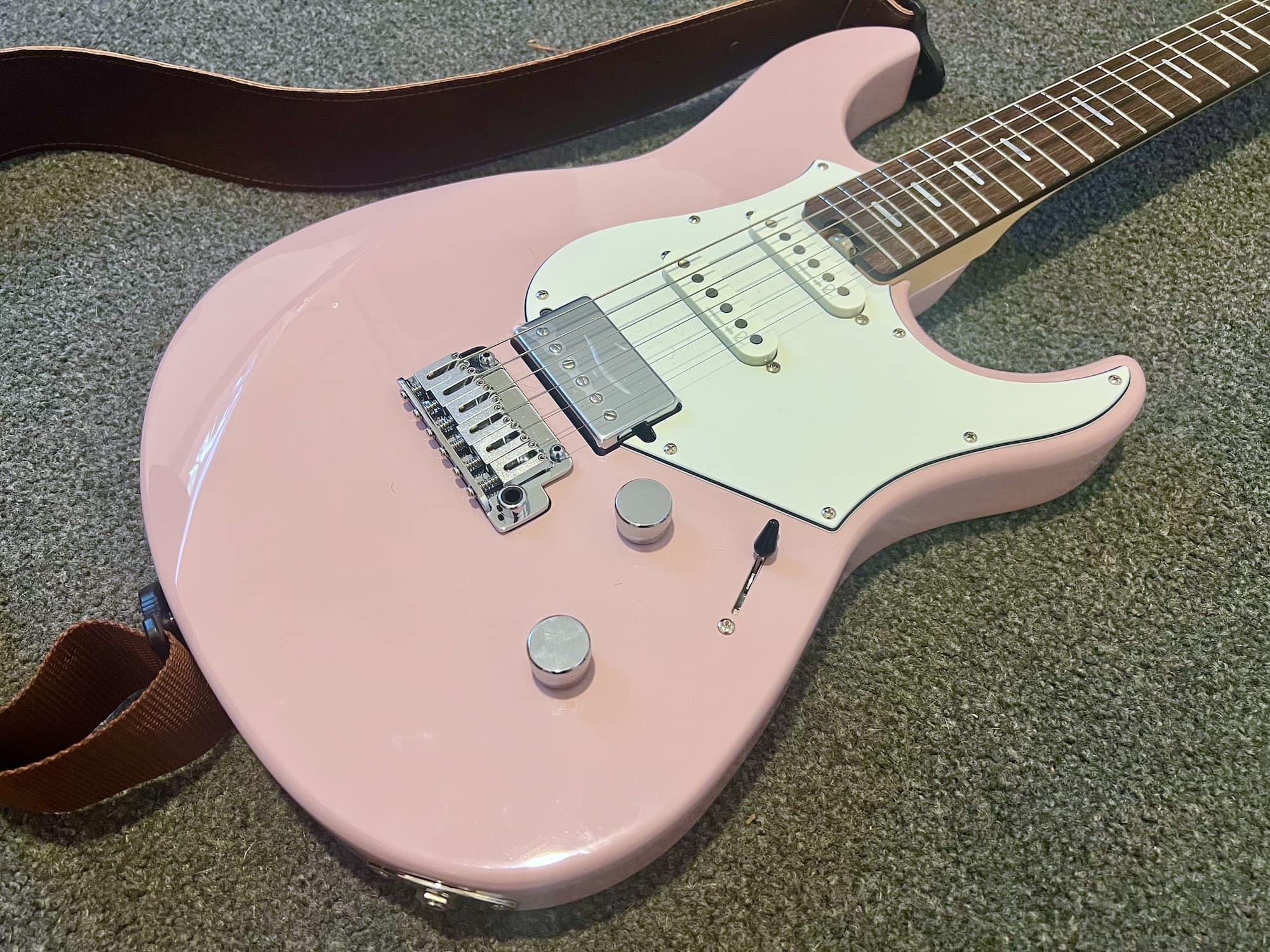
I bought that guitar new and so I could only sell it for a loss. But it doesn’t matter to me.
If you hate listings and arranging pickups, keep the guitar you like and spend the time playing it. If you enjoy the buying, tinkering and selling, though, you can try a surprising amount of gear without leaving a trail of lost money.
I’ve lost both time and money in other hobbies. With guitars, I’ve at least been ahead on the money so far — and it has been a load of fun along the way.