
The Yamaha Pacifica 311H is Underrated
The Yamaha Pacifica 311H is an awesome guitar, so if you’re wondering:
- Is it better than the Yamaha Pacifica 112V? Yes, it is (though they’re both great).
- Do you need to ‘upgrade’ it to the Pacifica 611H, or indeed anything else? No, you don’t.
- Does it have any direct competition? No!
Here’s a bit more detail.
My TL;DR is that both these guitars are great, and whichever one falls into your lap is a good one you can do a LOT with. If you have a 611H, you don’t have any reason to look down on your 311H-owning friends, and if you own a 311H, you have no reason to “upgrade”.

The Yamaha Pacifica 311H — In a Nutshell
I had been eyeing a few Pacifica guitars for my brother. He asked me to find a cheap guitar for him, and I was happy to oblige!
I had previously bought a Pacifica 112J. While I liked it, I found a few things about it awkward. The bridge was uncomfortable and had sharp bits after I set the action correctly. The neck and fretboard were fine but nothing special. And the pickups did the job, but weren’t particularly glorious.
So, I was on the hunt for a higher-spec Pacifica 112V, when this 311H one came up for a price I knew I could sell my 112J for. I promptly bought it and sold my 112J the next day.
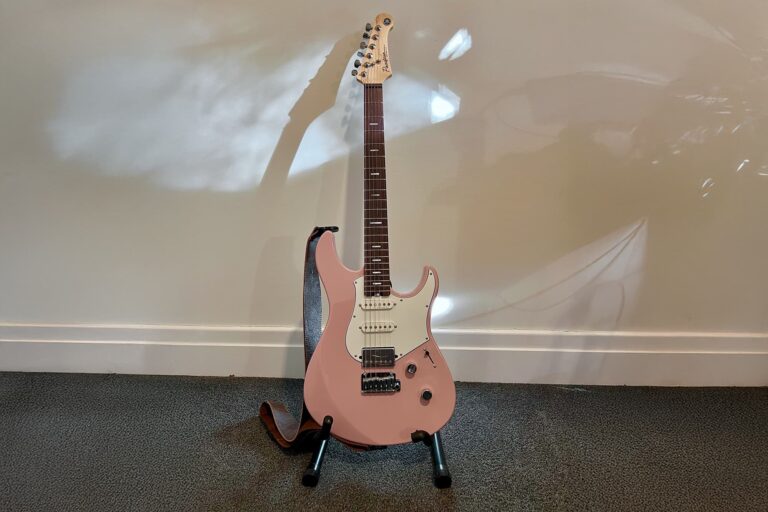
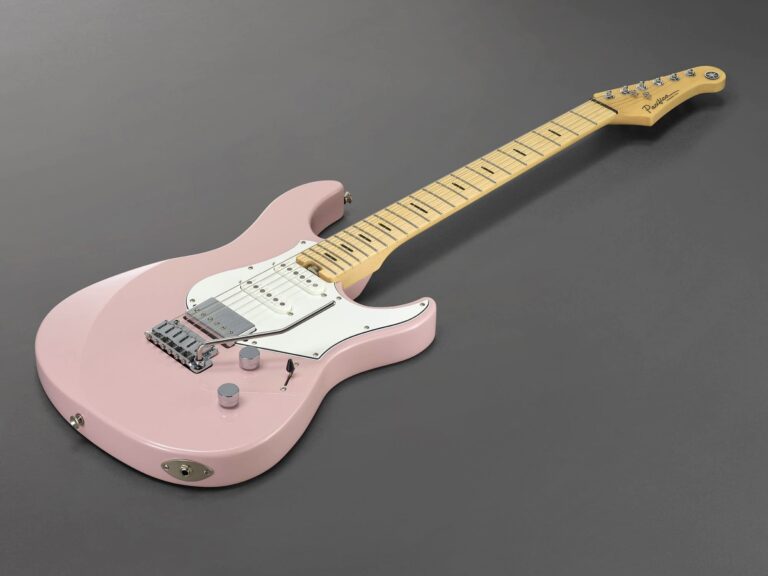
Briefly, I really like the 311H because it is pretty much the bare minimum needed to do almost anything on a guitar, without any frills. This includes
- A sparkling single-coil pickup at the neck (“P90-style”) for solos
- A humbucker at the bridge for heavier rock
- A splitter for the humbucker, so you can combine two coils for that “4th position” (or is it 2nd position? either way) Strat sound
- A fixed bridge. No mucking around with cheap tremolos that go out of tune
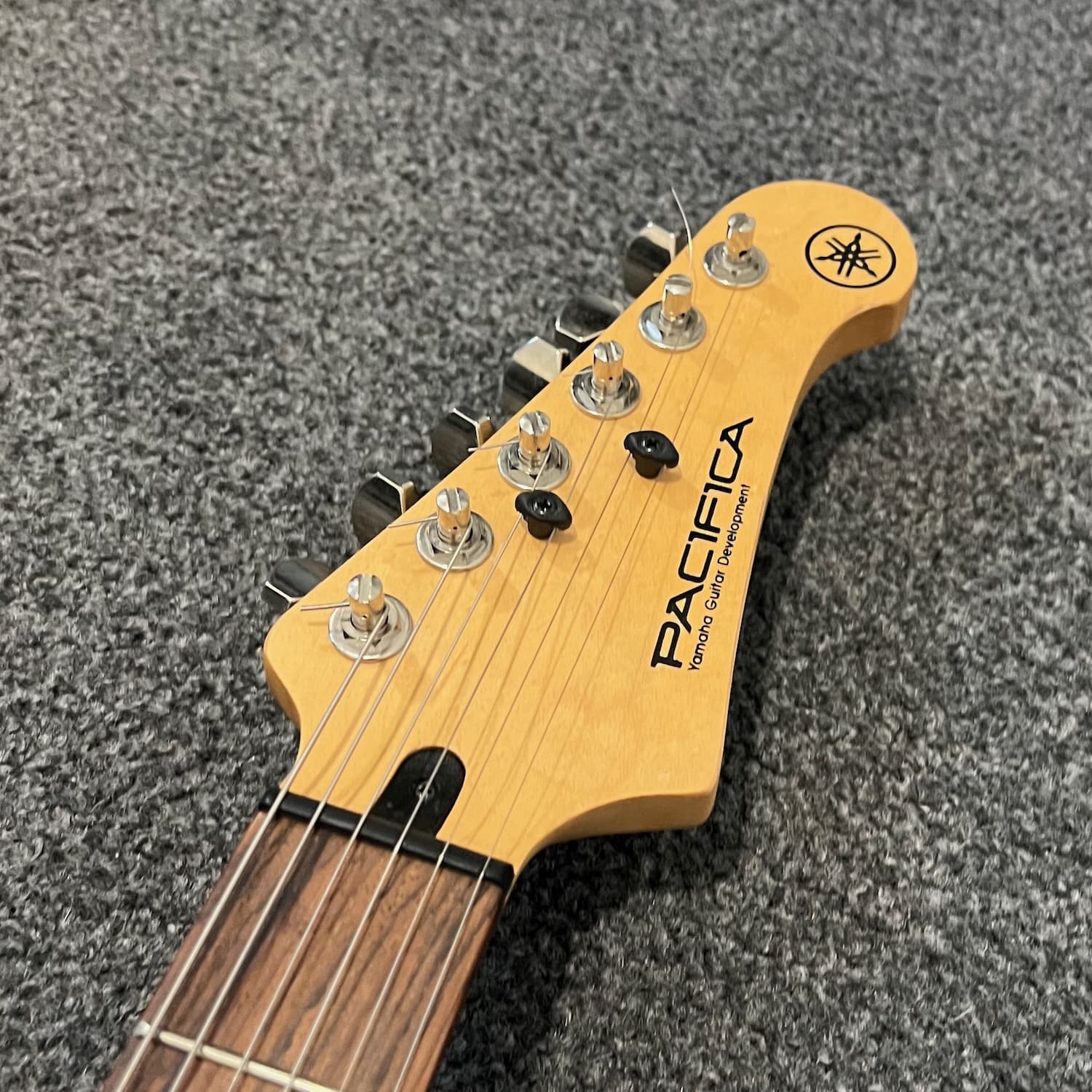
The Pacifica 311H has a rosewood fingerboard, somewhat of a rarity on cheaper instruments, and it even has locking tuners.
I picked one up second-hand for a steal to give to my brother. After setting it up correctly (it came set up and even intonated quite badly), it played like a dream, and I think it’s worthwhile knowing about.
Oh — and why is it “better” than the Yamaha Pacifica 112V? I know that’s a controversial (and 100% subjective, and maybe incorrect in your view) opinion, so let me explain my thoughts. The reason I like it more is that it has a) locking tuners as standard and b) a more interesting (and just as versatile) pickup combination. The pickup combo is rare to see on other guitars, and thus makes the Yamaha Pacifica 311H stand more alone in the crowd, whereas you can’t help but compare the 112V to a bunch of other HSS guitars. I also like the hardtail bridge of the 311H as it’s less fiddling than getting the float right on a trem bridge. OK, that’s all!
Not So Good Things about the Pacifica 311H
There’s one huge downside to buying second-hand — you don’t know how it has been set up. Or ruined. And it’s hard to tell just how broken it might be until you start taking it apart.
This isn’t unique to buying second-hand. I’ve also known people to buy Yamahas and get them badly set up from the factory.
On this Yamaha Pacifica 311H, I had to not just set the neck relief, but also the string action height and even the intonation (the low E was really out of whack; the A wasn’t so good, either).
(I also had to set up all those three things on the Pacifica 611H, mind you!)
On top of that, when I changed the strings, I realised that two of the locking tuners were broken.
Side note — I have personally never used Grover automatically locking tuners before. They don’t have a screw release mechanism; they just grab on when you start turning! Cool design. Yamaha has a page here showing how to use them, but the core of it is:
- Remove strings: Do so by turning pegs clockwise, as usual. As the string becomes loose, the lock automatically releases.
- Inserting strings: turn the top cap (you can use your fingers) until it “clicks” in place, and you can insert the string through the hole. The string doesn’t go through the middle of the tuner, so make sure it’s on the turning side (the ‘outside’ of the tightening direction). Then, tighten the tuner, and the string lock will lock into place.
A Few Cool Things About the Yamaha Pacifica 311H
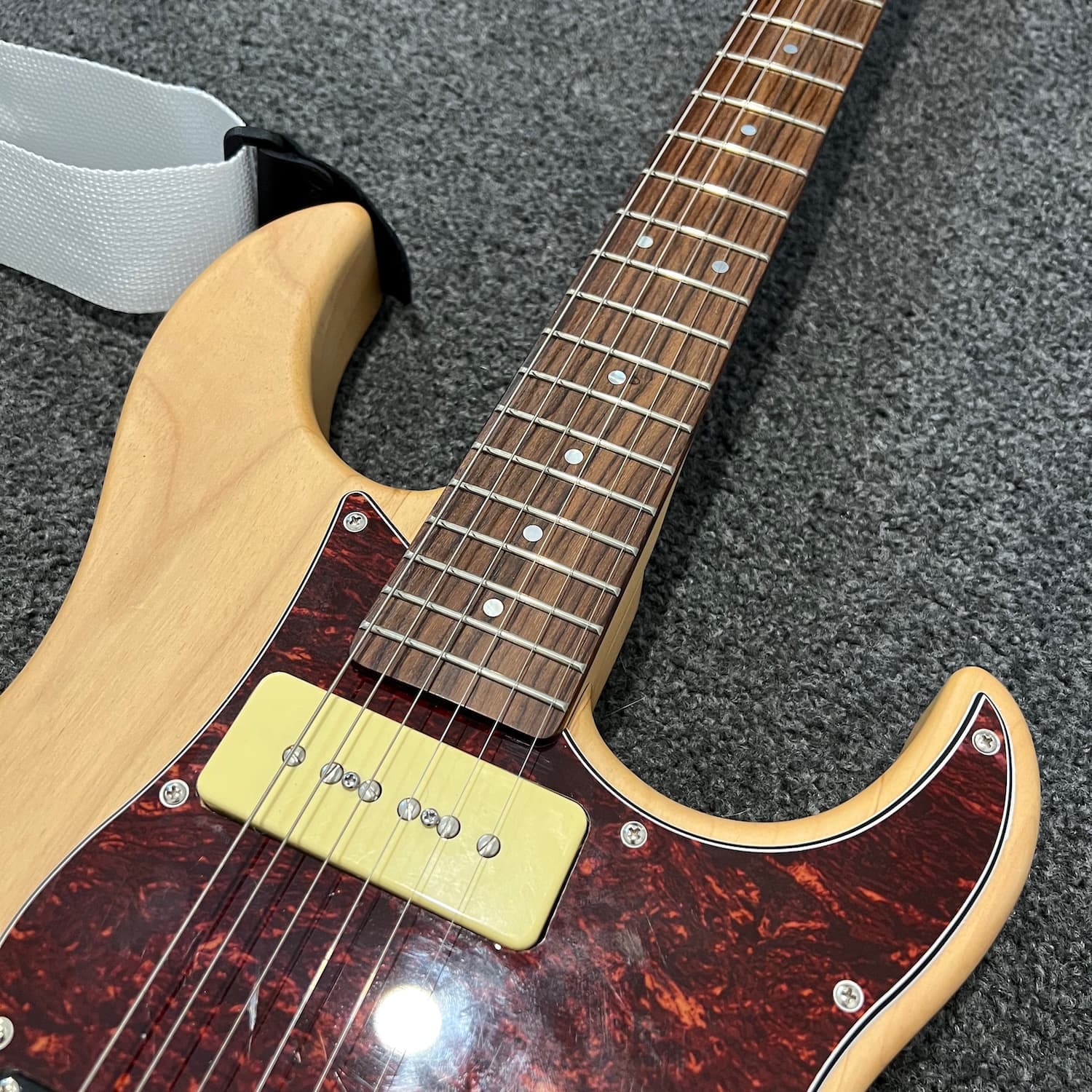

I usually like unusual guitars. If you give me a strat with SSS pickups and standard knobs… it may sound and play great, but it’s a bit boring to me. I like buttons, idiosyncratic features, things to toggle, etc. (I don’t think I’m alone in this. Of course, none of that makes for a “better” guitar.)
Anyway, here’s why I like the 311H.
Firstly, the single P90-style coil and humbucker are an awesome combo. Guitars with SSH combos get a lot of attention because they’re so versatile — and they are. But one strike against them, in my book, is that the middle pickup is where my strumming or picking happens, so there’s often a bit of physical interference.
This isn’t a deal-breaker — I mean, all guitars have their foibles — but it does make me enjoy two pickup guitars, like those with HH configurations. Or, in this case, P90-H.
Secondly, you can split the humbucker. Fender gatekeeps this feature, only allowing it on fairly high-end guitars like the American Professional II. It’s a laughably simple feature, though.
But what it means is you can combine the P90 with a single coil of the humbucker, and get a tone reminiscent of position 2 / 4 of the Stratocaster. This gives you a noise-free, glassy lead tone for your John Mayer-style riffs.
And aside from that, you still have the P90 at the top for basic solo-style sounds and the humbucker at the back if you want to get a bit heavy. It does all that with aplomb.
I’m a casual home player, and so I put the Pacifica 311H though my plethora of home-style amps. Currently a Positive Grid Spark (a sophisticated modelling amp that I actually rarely do anything terribly weird with), a Blackster HT-1R (a “hybrid” valve amp which is let down by its speaker… but which sounds amazing through headphones!) and a Roland Micro Cube I got basically for free which punches way above its weight.
I won’t bore you — it sounded good, all the time. Very few people will buy a cheap guitar and then put it through a sophisticated, high-output piece of vintage gear, anyway, so I hope the above are relevant!
The Pacifica 311H vs 611H

It’s almost inevitable that you’d compare the 311H and 611H. In fact, that’s why I wrote that post on Reddit!
Here’s what you get for about 2x the price (or a few hundred dollars more)
- Seymour Duncan pickups. These are “worth it” in the sense that they’re higher value. But are they “better”? Through home audio equipment, it’s hard to tell. The pickups in the 311H are already Alnico V pickups that sound great in every position.
- Flame maple top. Looks nice. But the natural look of the 311H also looks great.
- Wilkinson saddles. Called “string savers”, they have teflon to help prevent string breaks. Are string breaks that common? These aren’t super important (and, obviously, an easy aftermarket upgrade.
- Gloss neck. Looks nicer, but is a slight downgrade in terms of feel compared to the satin neck of the 311H. Only one, limited edition (and basically impossible to buy) version of the 611H has a satin neck — the limited run Yamaha Pacivica 611VFMX, which also has a tremolo bridge (which I don’t need… I have enough trem guitars) and an aluminium pickguard. I do want that pickguard…
Holding the Yamaha Pacifica 311H and 611H in the hand, 99% of the difference is in a) the gloss neck and b) whatever setup differences you might have between them.
Through an amp… yes, I do like the Seymour Duncans of the 611H, but I don’t think I’d have picked the “better” pickup in a blindfolded test.
I bought both of these guitars used, and I paid about 2x for the 611H than I did for the 311H. Or about a A$250 difference (about 150 Euros). If you’re buying new, you might pay a smaller percentage difference, but a bigger cash one…
Wrap up
I hope this gives you a bit more information about a guitar I couldn’t find much objective, detailed information about.
If you do end up buying one, or if you have one already, let me know!